The Kingdom of Chandory is built from layered histories, court records, private griefs, old alliances, battlefield debts, folklore, religion, dynastic politics, and stories people tell each other to survive the dark. This archive collects expanding lore, historical notes, cultural details, and worldbuilding from across the Chandory stories.
Royal History
The Reign of King Alric
The reign of King Alric is remembered in Chandory as a time of order bought at too high a price. To his defenders, Alric was a strong king who kept the nobles controlled, the borders watched, and the machinery of the crown firmly in his own hands. To those who survived him more closely, he was a brutal man whose idea of governance was indistinguishable from punishment.
Alric ruled through fear, humiliation, and force. He believed obedience was the highest virtue a subject, servant, wife, or child could possess, and he treated mercy as weakness unless it served his own authority. The court under Alric became rigid, watchful, and dangerous, a place where favor could vanish quickly and where cruelty often disguised itself as discipline.
His violence was not limited to matters of state. Within the royal family, Alric’s rule left wounds that shaped the next generation of Chandory’s monarchy. Prince Dairen, his heir, endured years of punishment meant to make him harder, colder, and more obedient. Alric also harmed or controlled his daughters, Sarah and Mary Elizabeth, using marriage, blame, and royal authority as extensions of the same cruelty he brought to court.
Politically, Alric centralized power around himself and kept noble houses carefully divided. He preferred obedience over trust, fear over loyalty, and appearance over genuine stability. This created a court that seemed orderly on the surface but was often rotten underneath, full of people who learned to survive by silence, flattery, or distance.
The later years of his life became increasingly bitter and isolated. Alric withdrew often to his hunting lodge at Hythebourne, a royal holding that became associated with anger, drink, decay, and the sour remains of power without love. His death did not immediately heal the kingdom, but it ended the most direct source of its fear.
Alric’s legacy remained long after his burial. His reign shaped the men who served him, the nobles who feared him, the servants who learned silence, and the children who inherited both his crown and the damage he left behind. Much of King Dairen’s reign can be understood as a deliberate answer to Alric’s: an attempt to prove that strength did not have to mean cruelty, and that a kingdom could be held together by loyalty instead of terror.
The Rise of Dairen and Emily
The rise of Dairen and Emily marked one of the most significant turning points in modern Chandorian history. Their marriage began as a personal defiance of King Alric’s expectations: a crown prince choosing a baron’s daughter for love rather than accepting a dynastic match arranged for power, rank, or foreign advantage.
Dairen first met Emily March when they were still very young, before either of them fully understood how much their lives would alter the kingdom. Where Alric saw softness, danger, and disobedience, Dairen found kindness, steadiness, and a kind of courage that did not need to announce itself with cruelty. Emily became the person who helped him imagine power without brutality.
Alric opposed the match, not because Emily was unworthy, but because Dairen had chosen her. Her comparatively modest birth made her an easy target for court resentment, but the deeper offense was that Dairen’s devotion to her could not be commanded, redirected, or beaten out of him. When Alric tried to forbid the marriage, Dairen threatened abdication rather than surrender Emily.
Their marriage changed the emotional center of the royal household long before it changed the kingdom officially. Emily brought warmth into chambers that had known too much fear. Dairen, though still marked by his father’s violence, began shaping himself around love, protection, and a deliberate refusal to become another Alric.
When Dairen took the throne, Emily did not remain a decorative consort. By his decree, she became co-regnant queen, ruling beside him with visible authority. Their shared rule unsettled traditionalists, strengthened reformers, and gave ordinary people a new image of the crown: not softened, not weakened, but bound by loyalty rather than terror.
The paired dragon-and-griffin banner became the clearest symbol of their reign. It declared that Chandory was no longer ruled by a single violent will, but by two sovereigns whose strengths answered and steadied one another.
Their rise did not erase Alric’s damage. It answered it. Through Dairen and Emily, Chandory began the slow, difficult work of becoming a kingdom where power might protect, mercy might endure, and love might stand openly in the same room as the crown.
The Co-Regnant Crown
The co-regnant crown of Chandory represents one of the most politically transformative developments in the kingdom’s modern history. Though Chandory had previously recognized ruling queens in their own right, the formal establishment of a visibly shared monarchy under King Dairen and Queen Emily reshaped both court culture and public understanding of royal authority.
At his coronation, Dairen decreed that Emily would rule beside him not merely as consort, but as co-regnant sovereign. The decision carried enormous symbolic and political weight. It granted Emily recognized governing authority within the kingdom and publicly affirmed that the crown would no longer function solely through the isolated will of a single ruler.
To supporters, the co-regnant crown represented balance, stability, and the deliberate rejection of the fear-driven governance associated with King Alric’s reign. Many common people viewed the arrangement favorably, particularly as the royal couple’s visible loyalty to one another contrasted sharply with the coldness and brutality that had previously dominated court life.
The royal banner introduced during their reign became the defining emblem of this shared authority: a dragon paired back-to-back with a griffin, representing king and queen ruling together. The imagery spread quickly throughout the kingdom, appearing on standards, official documents, military displays, royal seals, and ceremonial architecture.
Not all nobles welcomed the change. Some traditionalist factions viewed the co-regnant model as dangerous precedent, arguing that it diluted royal authority, complicated succession expectations, or granted excessive influence to a queen born outside Chandory’s greatest dynasties. Others feared the broader cultural implications of a monarchy that openly valued emotional loyalty, visible familial affection, and partnership rather than rigid hierarchy alone.
Despite opposition, the co-regnant crown proved politically durable. Dairen and Emily’s reign brought relative stability after years of fear and internal fracture, and their unified public image became deeply associated with the kingdom’s recovery.
Over time, the co-regnant crown came to symbolize more than shared rule. Within Chandory, it increasingly represented the idea that authority did not need to be cruel to remain strong, and that loyalty freely given might hold a kingdom together more securely than fear ever could.
Succession and Inheritance in Chandory
Chandory follows a system of male-preference primogeniture, meaning the eldest legitimate son traditionally inherits before younger sons or daughters, but women are not excluded from succession. In the absence of surviving sons, daughters may inherit lands, titles, and even the crown itself in their own right. This structure has produced ruling queens, prince consorts, female landholders, and periods of intensely contested succession throughout Chandorian history.
The system reflects the kingdom’s long-standing emphasis on bloodline continuity and dynastic stability above strict gender exclusion. While many noble houses still prefer male heirs for political and military reasons, Chandorian law recognizes that the survival of a house matters more than preserving exclusively male inheritance.
Titles, lands, and authority pass differently depending on rank, region, royal decree, and surviving family structure. Some noble holdings are ancient hereditary territories passed through generations with relatively stable succession traditions, while others, particularly newer titles or crown-created duchies, may carry more flexible conditions tied to service, loyalty, or direct royal favor.
Marriage also plays a significant political role in inheritance. Noble marriages often reshape alliances, military obligations, regional influence, and claims to land. In some cases, husbands of ruling women may gain elevated titles through marriage, though legal authority ultimately depends on the structure of the inheritance itself and the terms recognized by the crown.
The Chandorian crown itself has passed through both kings and queens across its history. One of the most significant precedents remains Queen Joanna, whose reign firmly reinforced the legality of female inheritance within the royal line. Her husband ruled as prince consort rather than king in his own right, establishing distinctions between inherited sovereign authority and authority gained through marriage.
Succession crises are among the most dangerous political events within Chandory. Illness, war, infertility, disputed legitimacy, child mortality, and competing noble interests have repeatedly threatened dynastic stability across generations. The recurring fevers, in particular, have permanently shaped Chandorian attitudes toward heirs, childbirth, and family survival, as entire succession lines have vanished within a single outbreak.
Because of this history, inheritance in Chandory is rarely treated as an abstract legal matter alone. It is emotional, political, religious, military, and deeply personal all at once. Noble families do not simply pass down land and titles. They pass down obligations, alliances, grievances, debts, expectations, and the lingering weight of the dead.
The Western Houses and Their Alliances
The western houses of Chandory are shaped by forests, hard roads, practical loyalties, and a long history of needing one another more than court fashion would ever admit. Farther from the most polished circles of the capital, the west developed its own habits of governance, defense, marriage, and mutual obligation.
House Blackthorne stands at the center of many of these alliances. Its lands, militia traditions, hunting culture, and close relationships with surrounding villages made it one of the most stable powers in the region even before Morgann Blackthorne’s rise brought the family into greater royal prominence.
House Avery, House March, and other neighboring families are tied into this western network through land, training, marriage negotiations, militia cooperation, and generations of shared political interest. These alliances are not always simple or painless. Old friendships can be bruised by ambition, inheritance disputes, failed courtships, and the dangerous pride of sons who believe land and women should bend to expectation.
Unlike some noble factions nearer the capital, the western houses often value usefulness, military readiness, and local stability over glittering court influence. A lord who cannot keep roads safe, villages fed, winter stores protected, and levies trained will not long command respect in the west, no matter how ancient his name may be.
The western alliance network became increasingly important during King Dairen’s reign. Men such as Joseph Blackthorne and Johnathan Avery had known Dairen before he wore the crown, and their loyalty was rooted not only in politics but in personal history. They remembered the prince before the king, and that memory shaped how they stood with him after Alric’s death.
These houses also became essential to Chandory’s internal stability. Their militias, riders, foresters, and local knowledge made them difficult to replace in moments of crisis. When the crown needed swift movement, trusted armed support, or honest intelligence outside the polished lies of court, the west often proved more reliable than the grander houses gathered nearest the throne.
The western houses are not free of resentment, rivalry, or ambition. No region of Chandory is. But their strength lies in a culture of hard practicality: feed people before they starve, train men before war arrives, keep roads passable, answer old debts, and remember which families stood beside yours when fear made silence easier.
Noble Houses
House Blackthorne
Ancient even by Chandorian standards, House Blackthorne has long ruled the western forests and highlands beyond the capital. Their banner, bearing a golden stag marked with a white rose against deep green, is recognized throughout the kingdom as a symbol of fierce loyalty, hard-earned endurance, and a stubborn refusal to abandon the people under their protection.
Unlike many noble houses closer to court, the Blackthornes are known less for ornament and intrigue than for practical governance, military competence, and unusually close ties to the villages surrounding their lands. Their retainers, foresters, huntsmen, and militia often speak of the family with something closer to personal loyalty than obligation, a reputation earned over generations of harsh winters, recurring fevers, border dangers, and long memory.
Blackthorne lands are heavily forested and culturally shaped by hunting traditions, woodland travel, self-sufficiency, and old regional customs that survived even as court fashions changed elsewhere in Chandory. The house has produced archers, riders, military commanders, and fiercely capable women almost as often as it has produced lords.
Under Count Joseph Blackthorne and later Morgann Blackthorne, the house became increasingly associated with practical mercy as much as strength. Villages under Blackthorne protection are often better provisioned during winter than neighboring territories, and the house maintains a reputation for feeding people before impressing them.
Though respected throughout Chandory, House Blackthorne is also viewed with a certain wary fascination by more traditional court circles. The family’s closeness with the crown, its independent streak, and Morgann Blackthorne’s later rise as Defender of the Realm transformed the western house from a respected regional power into one of the most politically significant families in the kingdom.
House Avery
House Avery stands among the old western noble families whose fortunes have long been tied to the forests, trade roads, and borderlands surrounding Blackthorne territory. Though less powerful than some of Chandory’s great houses, the Averys maintain deep regional influence through military service, political reliability, and generations of carefully maintained alliances.
Their lands are known for horse breeding, hunting grounds, and strong local levies, and the family has traditionally supplied capable riders, officers, and retainers to both regional and royal service. Like many western houses, the Averys tend toward practicality over extravagance, though they are generally considered more traditionally court-minded than House Blackthorne.
For generations, House Avery maintained close ties with both the Blackthornes and the crown, relationships strengthened through shared military service, neighboring territories, fosterage, and overlapping political interests. Members of the family trained alongside future nobles, captains, and royal retainers at Tunbridge and other martial households, helping cement the western alliance network that became increasingly important during the reign of King Dairen.
At court, House Avery is often viewed as respectable, disciplined, and politically cautious. The family carries a reputation for competence and loyalty, though like many noble houses, internal ambitions and personal grievances occasionally strain even longstanding alliances.
Despite periods of tension, the Averys remain deeply woven into the political and military fabric of western Chandory, particularly in matters involving regional defense, noble levies, succession disputes, and crown stability.
House March
House March is one of Chandory’s older lesser noble families, respected less for military power or vast wealth than for education, political intelligence, and an unusual ability to endure proximity to the crown without becoming consumed by court ambition. Though modest compared to some of the kingdom’s great dynasties, the family’s influence grew significantly following the marriage of Lady Emily March to the future King Dairen.
Originally based east of Blackthorne territory near the capital, the March family developed a reputation for literacy, capable estate management, and strong regional relationships with both villagers and neighboring noble houses. Their lands are fertile rather than strategically grand, and the family historically relied more on diplomacy, marriage alliances, and careful stewardship than displays of force.
The Marches also maintain distant blood ties to the Mortimer and March lines of England, a connection largely treated as historical curiosity until Queen Emily’s rise unexpectedly placed those distant dynastic threads into wider political conversation beyond Chandory’s borders.
Within Chandory itself, House March became quietly symbolic of the changing nature of Dairen’s reign. Emily’s elevation from a baron’s daughter to co-regnant queen challenged many older court assumptions about power, lineage, and what kind of woman could stand beside a king without disappearing beneath him.
Though some traditionalist nobles initially viewed the March family as socially insufficient for the crown, years of stability, loyalty, and visible devotion between Dairen and Emily gradually transformed public perception. By the later years of the reign, House March became associated not only with the queen herself, but with the broader cultural shift away from the fear-driven brutality that had defined King Alric’s court.
Members of House March are often regarded as intelligent, emotionally perceptive, politically observant, and far more difficult to intimidate than their comparatively modest origins first suggest.
Duchy of Hythebourne
Hythebourne is among the youngest duchies in Chandory and one of the most politically unusual. Carved partly from former crown lands once held directly by King Alric, the duchy was granted to Morgann Blackthorne following her service to the crown during one of the kingdom’s most dangerous internal crises. Her elevation to Duchess of Hythebourne and Defender of the Realm marked both a reward for extraordinary loyalty and a visible shift in how King Dairen intended power to function within Chandory.
Centered around an old royal hunting lodge deep in the western forests, Hythebourne was once associated with Alric’s later years: isolation, bitterness, heavy drinking, and the increasingly grim atmosphere that surrounded the end of his reign. Under Morgann’s rule, however, the territory changed dramatically. The lodge itself was expanded, repaired, and transformed into a warm, heavily lived-in stronghold known as much for safety and hospitality as for military readiness.
Hythebourne developed a reputation for practical governance, aggressive winter preparation, unusually fair treatment of villagers, and fierce territorial defense. Morgann’s policies regarding seasonal hunting rights became especially famous among common people, allowing villages controlled access to game during hard seasons in ways many nobles considered dangerously generous. Morgann’s response to such criticism was generally direct: hungry people become desperate, and desperate people overthrow kingdoms.
The duchy is also closely associated with older western traditions involving warding, folk practice, forest knowledge, and protective customs that predate much of the Church’s influence within the region. Running water, iron, salt, carved protections, prayer, and woodland lore remain deeply woven into local life, particularly around the Hythebourne seat itself.
Throughout Chandory, Hythebourne is viewed with a mixture of admiration, suspicion, gratitude, and unease. To some nobles it represents dangerous change, excessive independence, and the unsettling rise of a woman whose authority was earned publicly rather than inherited quietly. To others, particularly throughout the western territories, Hythebourne represents safety, survival, and the possibility that power might sometimes be used to protect rather than merely command.
The sigils most associated with Hythebourne are crows and ravens, symbols tied not to death alone, but to watchfulness, memory, protection, and the stubborn survival of wounded things.
The Royal Line of Chandory
The royal line of Chandory traces its ancestry through centuries of conquest, strategic marriages, fragile alliances, plague years, succession disputes, and periods of hard-won stability. Unlike some neighboring kingdoms, Chandory allows women to inherit the crown in their own right under male-preference primogeniture, a tradition shaped by earlier ruling queens whose reigns permanently altered the structure of the kingdom.
For much of its history, the crown was associated with military strength, centralized authority, and the expectation that rulers survive by inspiring fear as much as loyalty. Those expectations reached their harshest form during the reign of King Alric, whose brutality left deep scars not only within the royal family itself but throughout the broader political culture of Chandory.
The succession of King Dairen marked a major turning point in the kingdom’s history. Though raised under Alric’s violent rule, Dairen’s reign gradually became associated with reform, stability, military competence, and a deliberate effort to rebuild trust between crown and kingdom. His marriage to Lady Emily March, later Queen Emily and co-regnant sovereign beside him, transformed both the public image and internal culture of the monarchy.
The paired dragon-and-griffin royal banner introduced during their reign became one of the defining symbols of modern Chandory. To supporters, it represented balance, shared rule, survival, and a monarchy no longer built solely upon fear. To critics and traditionalists, it represented dangerous change and the weakening of older hierarchies that had once kept noble power rigidly controlled.
The royal family itself became increasingly known for unusually visible familial loyalty and emotional closeness, something that fascinated, comforted, and occasionally unsettled the court in equal measure. Public affection between king and queen, genuine warmth toward their children, and strong personal ties with allied houses reshaped how many ordinary people viewed the crown.
Yet despite periods of peace and reform, the royal line remains shadowed by the realities that have always haunted Chandory: succession fragility, recurring illness, old grievances, political ambition, and the dangerous truth that crowns often attract not only loyalty, but hunger.
Religion and Folk Belief
- Church influence within Chandory
- Older warding traditions
- Folk healing and herbcraft
- Death customs
- Superstition, haunting, and old magic
Warfare and Defense
- Castle defenses
- The royal guard
- Blackthorne militia traditions
- Hunting culture
- Warbows and cavalry
Daily Life
- Food and drink
- Clothing and court presentation
- Festivals and mourning customs
- Marriage traditions
- Village life throughout the kingdom
Creatures, Legends, and Horror
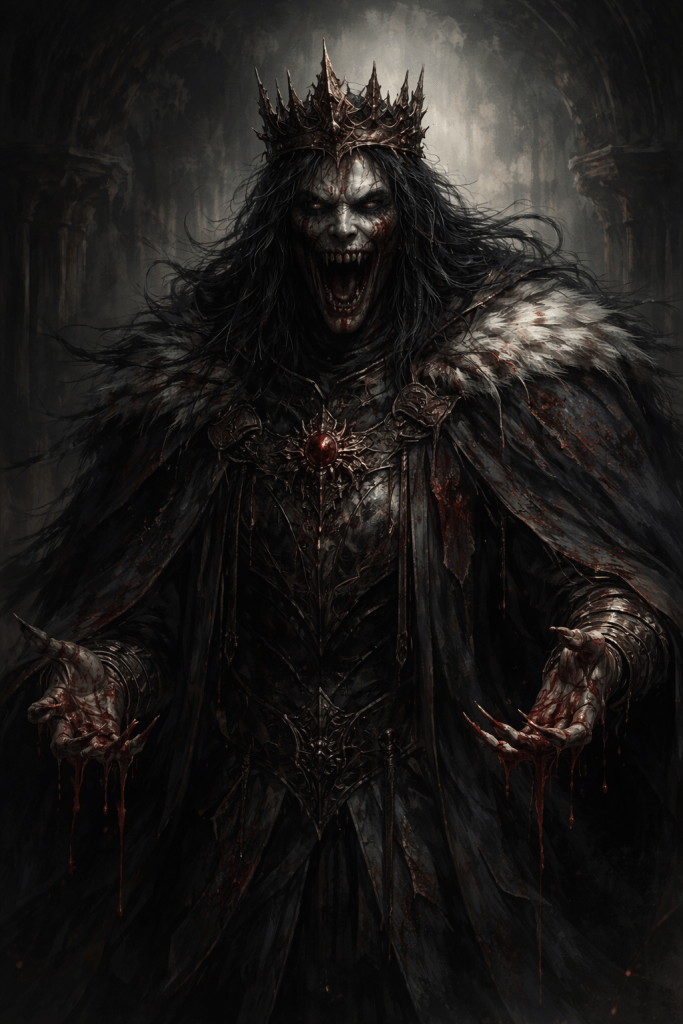
- The kingthing
- Warded places
- Mimicry and possession
- Crows and protective symbols
- Stories told in the western forests
Additional lore entries and archive materials will continue to expand alongside current and future Chandory projects.
 The Kingdom of Chandory