Major Characters of Chandory
The world of Chandory is built as much through loyalty, grief, tenderness, and memory as through crowns and war. These are some of the central figures within Shadow of the King and the wider Chandory stories.
Morgann Blackthorne
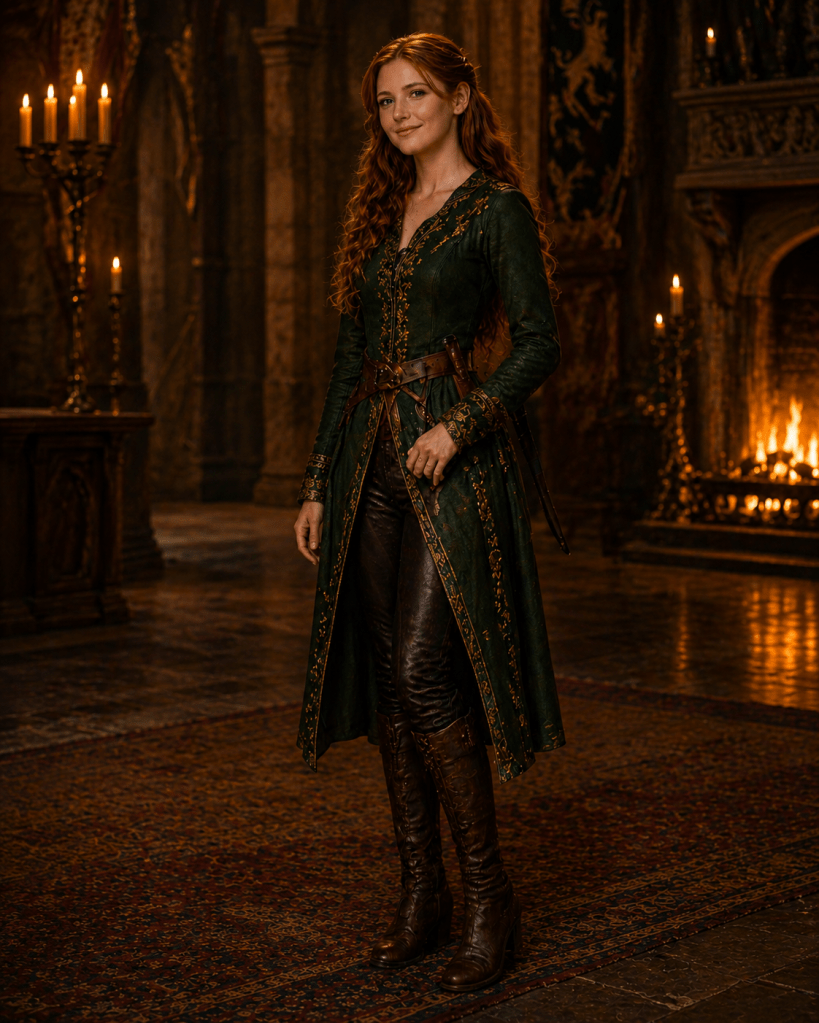
Morgann Blackthorne is the young Countess of Blackthorne, heir to one of Chandory’s old western houses and one of the most quietly disruptive figures to move through the royal court. Tall, auburn-haired, green-eyed, and far more at home in a long tunic and trousers than in court gowns, Morgann has never fit easily into the shape other people expected of a noblewoman.
Raised among forests, horses, militia drills, hunting paths, and a household that valued competence over ornament, Morgann learned early how to survive by being useful. She can ride hard, shoot harder, dress a kill, read a room, command men older than she is, and notice danger before most people have admitted danger is present. Her skill with a warbow is famous in the west and increasingly impossible for the rest of Chandory to ignore.
Yet Morgann’s danger is only one part of her. She is often kinder than people first realize, in part because her directness can look like sharpness to those accustomed to softer lies. She has very little patience for cruelty, posturing, or the kind of tradition that survives only because no one has yet had the nerve to call it useless. Her loyalty, once earned, is fierce and practical. She does not merely promise protection. She checks the doors, counts the arrows, feeds the hungry, watches the exits, and stands where she is needed.
Morgann’s bond with Crown Prince Rhys places her closer to the royal family than many at court find comfortable. Where others see a countess too wild, too blunt, too tall, too armed, or too unwilling to lower her eyes, Rhys sees the woman herself: intelligent, funny, stubborn, brave, and painfully aware of what it means to be unwanted in rooms that were never built for girls like her.
Her relationship with the royal family is shaped by that same tension between usefulness and love. Morgann is very good at being necessary, but far less certain what to do when people love her without needing her to bleed for it first. In Chandory, where crowns carry old wounds and noble houses remember every slight, that uncertainty may prove as dangerous as any weapon she carries.
Morgann is not polished enough to be harmless. She is not obedient enough to be easily managed. She is not cruel enough to become what cruel people expect from power. And that makes her one of the most important people in Chandory before anyone fully understands why.
Crown Prince Rhys
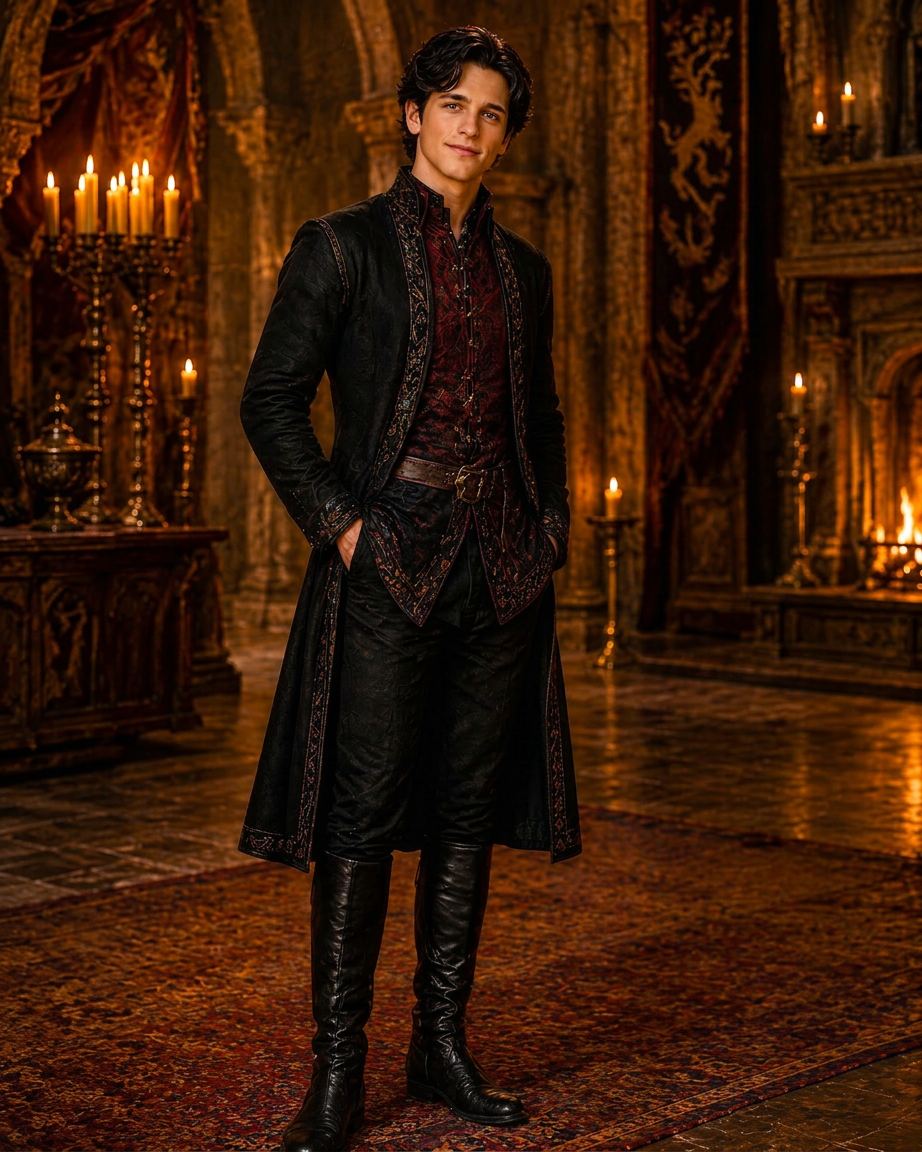
Crown Prince Rhys is the heir to Chandory, the son of King Dairen and Queen Emily, and a young man raised beneath the weight of a crown that has never been allowed to feel simple. Black-haired and blue-eyed like all of Dairen and Emily’s children, Rhys carries the visible stamp of the royal line, but his temperament is shaped just as strongly by the love that surrounded him from childhood.
Unlike his father, Rhys was not raised to mistake fear for respect. He grew up in a royal household where affection was visible, loyalty was expected to be earned, and power was not supposed to excuse cruelty. That difference matters. It makes him more open than Dairen, quicker to trust, quicker to laugh, and far more willing to say what he feels before court caution can bury it alive.
Rhys is not careless, though some at court mistake warmth for softness. He has been trained for command, combat, diplomacy, and the long, difficult discipline of becoming king after a father whose reign changed the shape of Chandory. He understands duty, but he does not worship it blindly. He knows the crown will one day demand much from him, and he is still young enough to resent, fear, and reach toward it all at once.
His bond with Morgann Blackthorne reveals much about him. Where others see her as strange, unsuitable, too armed, too blunt, too much herself, Rhys sees her clearly and loves what he sees. He is not drawn to the idea of taming her, softening her, or making her easier for court to swallow. He admires her strength without being threatened by it, and he trusts her competence without reducing her to it.
There is a sweetness in Rhys that has survived the brutal inheritance of monarchy, but it should not be mistaken for weakness. He can be stubborn, brave, impulsive, and quietly defiant when something he loves is threatened. He carries his mother’s emotional clarity and his father’s protective instinct, though in him those qualities are less guarded, less armored, and sometimes more painfully exposed.
Rhys stands at the edge of two versions of Chandory: the kingdom his grandfather damaged, and the kingdom his parents have tried to build in answer. His life is shaped by expectation, grief, love, training, court scrutiny, and the dangerous hope that a crown might be carried without becoming a weapon against everyone near it.
He is young. He is loved. He is watched. And in a kingdom where old wounds rarely stay buried, those things may matter as much as bloodline, title, or sword.
Queen Emily
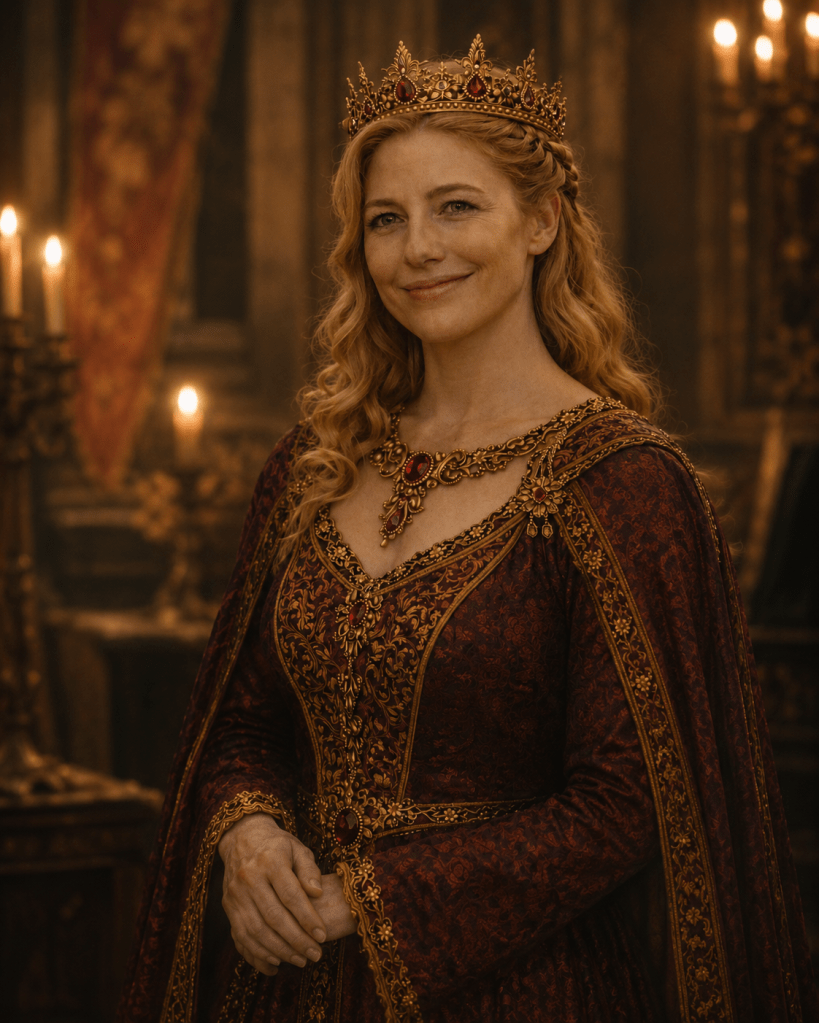
Queen Emily is the co-regnant queen of Chandory, wife of King Dairen, mother of the royal children, and one of the quietest forces holding the kingdom together. Blonde-haired and blue-eyed, with a gentleness too many fools have mistaken for weakness, Emily entered the royal family as a baron’s daughter and became something far more dangerous than the court expected: beloved, observant, and very difficult to break.
Emily’s strength is not loud. It does not announce itself with raised steel or a command voice unless the moment demands it. More often, it lives in endurance, attention, mercy, and the stubborn refusal to let cruelty define the shape of the rooms she inhabits. She notices who has gone hungry, who is standing too still, who has stopped speaking, who is afraid of being touched, who has learned to survive by obedience. She sees people whole, which is rarer at court than rank, beauty, or power.
Her marriage to Dairen changed Chandory long before either of them fully understood how. Where King Alric’s court had been shaped by fear, humiliation, and silence, Emily brought warmth without foolishness and tenderness without surrender. Dairen did not make her queen because she was ornamental. He made her queen because he trusted her mind, her judgment, and the steadiness of her heart.
As co-regnant queen, Emily rules beside him with real authority. She is not merely the king’s wife, though she is deeply and visibly loved by him. She is sovereign in her own right by his decree, and over time the kingdom has learned that her softness has weight. She is capable of patience, diplomacy, forgiveness, and grace, but none of those things make her blind. Emily understands power. She understands fear. She understands what it costs to keep choosing kindness in a world that keeps offering cruelty as the easier tool.
Within the royal family, she is the living center around which much else turns. To her children, she is warmth, safety, discipline, and refuge. To Rhys, she is one of the reasons he grew into a young man capable of loving without shame. To Morgann Blackthorne, Emily becomes something more complicated and more precious than a queen: a woman who sees the girl beneath the usefulness, beneath the weapons, beneath the armor other people keep praising because it is easier than admitting she has needed protection too.
Emily is not harmless because she is kind. She is kind despite knowing exactly how much harm people can do. That is what makes her dangerous. That is what makes her beloved. And that is why Chandory changes around her, slowly, painfully, and not always willingly, like a wounded thing learning it does not have to bite every hand that reaches for it.
King Dairen
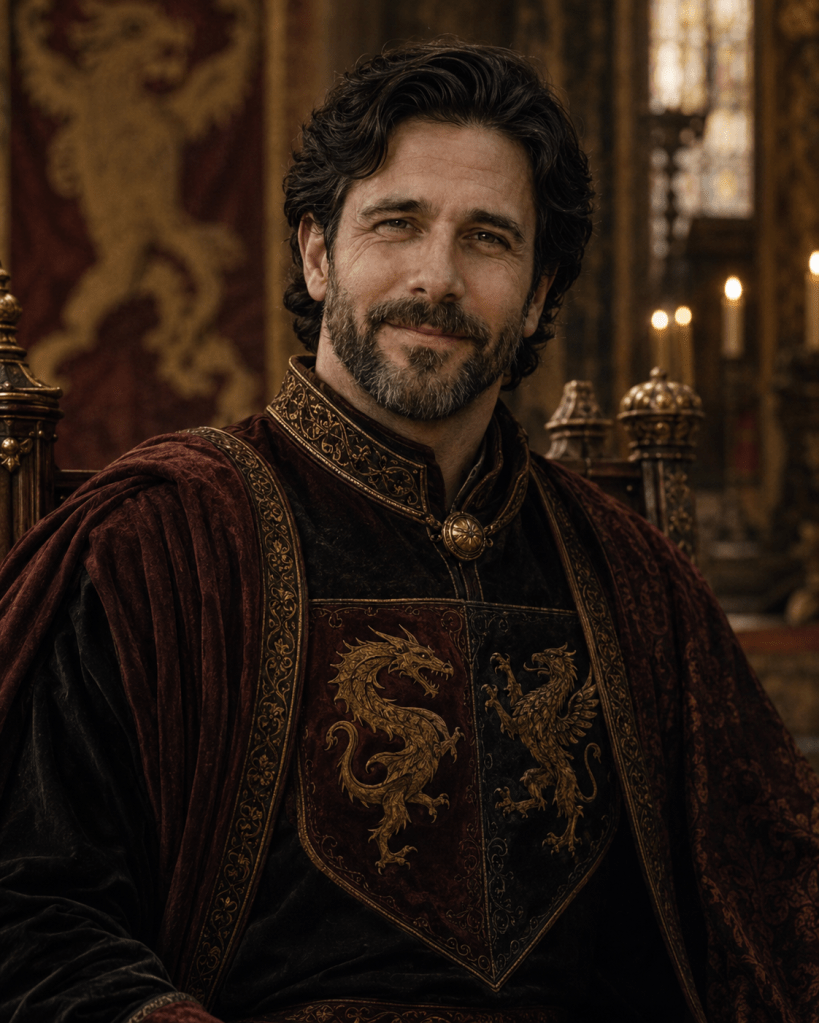
King Dairen is the ruler of Chandory, husband of Queen Emily, father of the royal children, and the man who inherited a crown soaked in his father’s cruelty. Black-haired, green-eyed, controlled until he is not, Dairen is a soldier-king shaped by discipline, rage, love, and the lifelong work of refusing to become the man who raised him.
He was born into power but not safety. Under King Alric, obedience was beaten into the royal household until fear became another language spoken in corridors, council chambers, and private rooms. Dairen learned young how to measure danger by silence, by posture, by the look in a man’s eye before the blow came. He also learned, somehow, not to let that be the only inheritance he passed on.
His reign is an answer to Alric’s. Not a perfect answer, not a clean one, but a deliberate one. Dairen is not gentle by nature in the way Emily is gentle. His mercy has edges. His temper is volcanic, his patience often hard-won, and his protective instincts can become terrifying when someone he loves is threatened. But he understands the difference between strength and cruelty, and he has spent his reign carving that difference into law, custom, household, and court until even his enemies have had to see it.
Dairen loves with a force that frightens him. Emily is the central fact of his life, the choice he made before crown, father, dynasty, or safety. He chose her when choosing her cost him. He continues to choose her in every public and private way that matters. Their marriage is not court ornament. It is the axis of his rule, the place where his worst inheritance met the first person who made him believe he could be more than what had been done to him.
As king, Dairen is formidable: politically intelligent, militarily experienced, suspicious by habit, and difficult to manipulate once his trust has been broken. He can be blunt, cold, and frighteningly decisive when necessary. Yet those closest to him know the harder truth beneath the crown. He is a man still learning how to receive love without flinching from it, still learning that being needed is not the same as being valued, still learning that his children do not obey him because they fear him and that this is not failure, but victory.
His relationship with Rhys reveals the kingdom he has tried to build. Rhys was raised loved, openly and without the constant fear that marked Dairen’s own childhood. That difference is sometimes painful for Dairen to witness, not because he resents it, but because it proves how much was stolen from him. Still, he would rather ache from seeing his son loved well than ever see him hardened by the old ways.
His relationship with Morgann Blackthorne unsettles him in another way. She is not his daughter by blood, not his subject in any simple sense, not easily commanded and not easily dismissed. She is useful, yes, violently so when needed, but Dairen sees the danger in letting usefulness become the only language she trusts. In her, he recognizes a wound adjacent to his own: the fear that love must be earned by service, by obedience, by bleeding well enough to be kept. It makes him protective. It makes him clumsy. It makes him try.
Dairen is not a soft king. Chandory could not have survived one. But neither is he Alric reborn, whatever ghosts whisper in old stone. He is a man with blood on his hands, love in his mouth, grief in his bones, and a kingdom watching to see whether a crown can be held by someone who knows exactly how heavy it is.
Princess Adrianna and Prince Seth
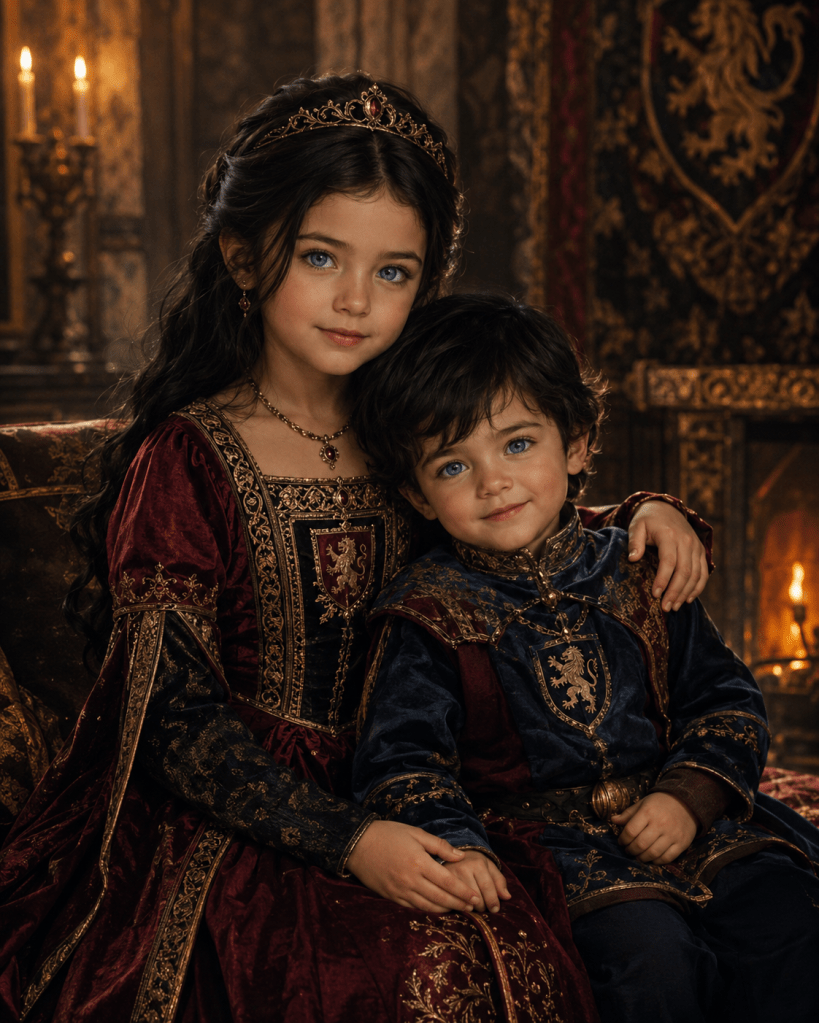
Princess Adrianna of Chandory is the daughter of King Dairen and Queen Emily and the younger sister of Crown Prince Rhys. Clever, observant, emotionally perceptive, and far less easily fooled than many adults initially assume, Adrianna grew up within a royal household shaped as much by love as by political responsibility.
Unlike her father’s childhood, Adrianna’s upbringing is marked by visible affection, safety, and the steady certainty that she is wanted. She moves comfortably between royal chambers, nursery rooms, guard corridors, kitchens, stables, and family spaces, equally capable of behaving like a princess at court or a child hiding beneath tables to listen to conversations she was never meant to hear.
Adrianna is particularly close to Morgann Blackthorne, whom she views not as a distant noblewoman but as part of the emotional center of the family itself. Morgann’s practical protectiveness, willingness to answer questions honestly, and refusal to dismiss Adrianna’s fears or intelligence forged a deep bond between them long before Morgann formally entered the royal family.
Though young, Adrianna has already lived through periods of danger, political tension, illness, and fear surrounding the crown. These experiences sharpened her instincts early. She notices changes in mood quickly, understands when adults are frightened even when they try to hide it, and possesses the quiet watchfulness common among children raised near power.
At court, Adrianna is often viewed as bright, spirited, and unusually confident around soldiers, retainers, animals, and household staff. Within the family, however, she is cherished most for something simpler: the warmth, laughter, and fierce uncomplicated love she brings into rooms too often burdened by history and responsibility.
Prince Seth of Chandory is the youngest surviving child of King Dairen and Queen Emily. Much younger than his elder siblings, Seth grew up surrounded not only by parents and household staff, but by an entire network of fiercely protective older figures including Rhys, Morgann, Adrianna, Jonah Bowen, and much of the extended royal household.
Still small enough to move through the world with open trust, Seth represents something emotionally significant within the royal family: proof that the crown did not destroy tenderness entirely. He is affectionate, stubborn in the way very young children often are, and deeply attached to the people he considers safe.
Seth’s relationship with Morgann is especially beloved within the household. Unable to pronounce her name properly when younger, he began calling her “mornin,” a family nickname that endured long after he was capable of saying Morgann correctly. The name became symbolic of the unusually close bond between Morgann and the royal children.
Like Adrianna, Seth was raised within a household far warmer than the one that produced his father. Dairen’s protectiveness toward him is often intense, sharpened by both childhood trauma and the memory of losing older children to illness before Seth’s birth. Emily, meanwhile, treats Seth with the same grounded tenderness she brings to all her children: love without fragility, warmth without indulgence.
Though still young, Seth occupies an important emotional place within Chandory’s royal image. To many throughout the kingdom, the sight of the royal family openly loving their children remains one of the clearest symbols of how profoundly the monarchy changed after Alric’s death.
Within the household itself, however, Seth is simply what he has always been: adored.
Captain Jonah Bowen

Captain of the Guard. Steady, capable, and quietly compassionate beneath soldierly practicality, Jonah serves as one of the royal family’s most trusted protectors. He often finds himself balancing military realism against the increasingly strange and dangerous realities surrounding the crown.
Destry
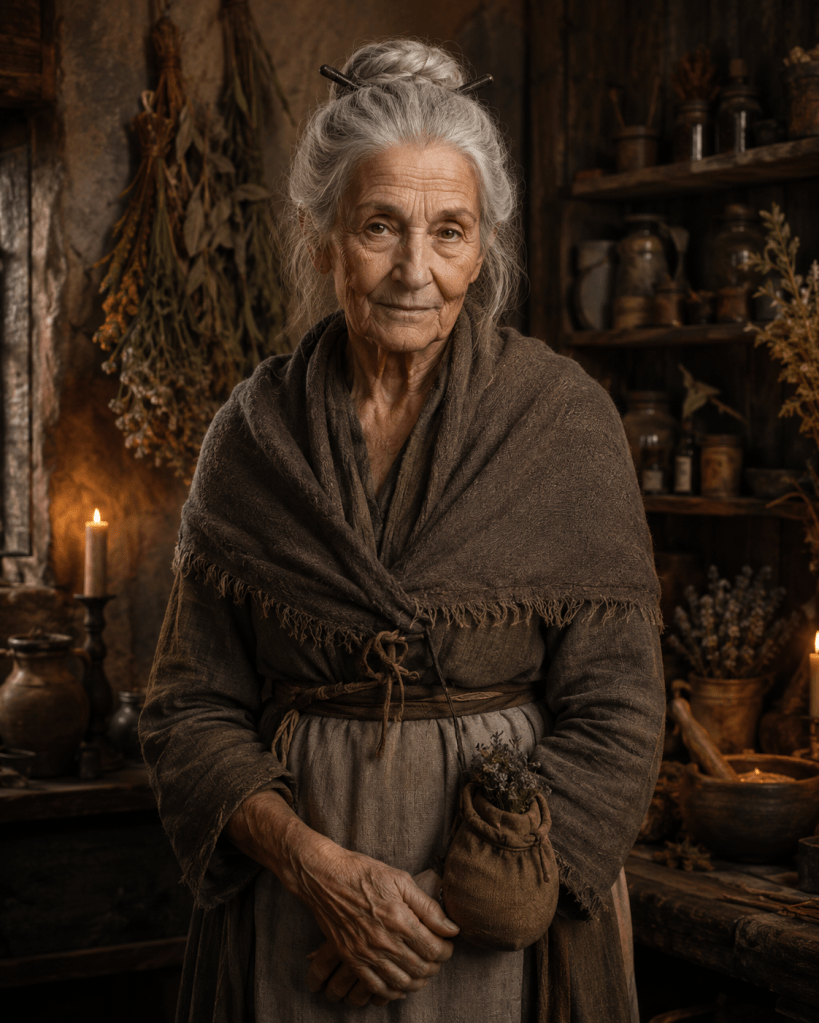
Healer, midwife, forager, and keeper of older knowledge than the Church entirely approves of. Destry delivered generations of royal children and understands the difference between medicine, poison, warding, and prayer better than most scholars ever will.
Count Joseph Blackthorne
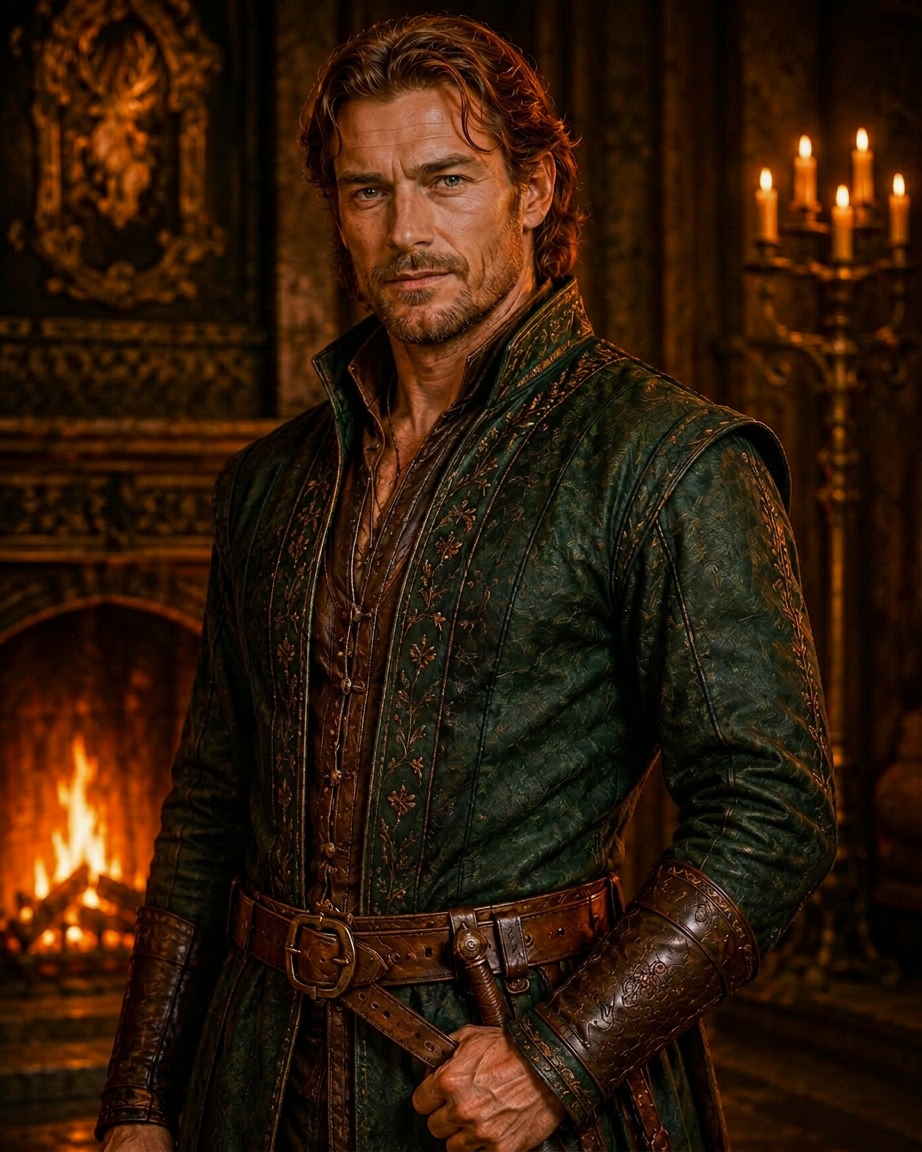
Lord of House Blackthorne and father of Morgann Blackthorne, Joseph Blackthorne is widely respected throughout western Chandory for his steadiness, military competence, and practical understanding of leadership. Tall, broad-shouldered, and more comfortable in hunting leathers than court finery, Joseph embodies much of the western nobility’s distrust of needless ornament and empty political performance.
As a young man, Joseph trained alongside the future King Dairen and Baron Johnathan Avery at Tunbridge, where the friendships and loyalties that later shaped the western alliance network first began. Even then, Joseph recognized that some of the bruises worn by the crown prince came from more than training accidents, a realization that forged a protective loyalty lasting well into adulthood.
Under Joseph’s leadership, Blackthorne lands became known for stability, strong militia organization, reliable winter preparation, and unusually close relationships between noble household and surrounding villages. He values competence over polish, directness over manipulation, and tends to judge people more by how they behave under pressure than by rank alone.
Though capable of violence when necessary, Joseph is not needlessly cruel, and his household reflects that difference. Blackthorne retainers and tenants often display a degree of personal loyalty uncommon in many noble territories, owing as much to trust as obligation.
Joseph’s relationship with his daughter Morgann is particularly well known within the family’s inner circles. He encouraged her education, tolerated very little mockery of her unconventionality, and allowed her to develop martial and practical skills many noble daughters would have been denied. His frequent observation that Morgann inherited “his height and her mother’s spite” became something of a family joke throughout the western houses.
Despite his relative discomfort with court politics, Joseph became increasingly important during King Dairen’s reign as western alliances strengthened and Morgann’s own political significance rose. He remains one of the crown’s most trusted regional allies and one of the few men capable of speaking bluntly to the king without fear.
Lady Eliana Blackthorne
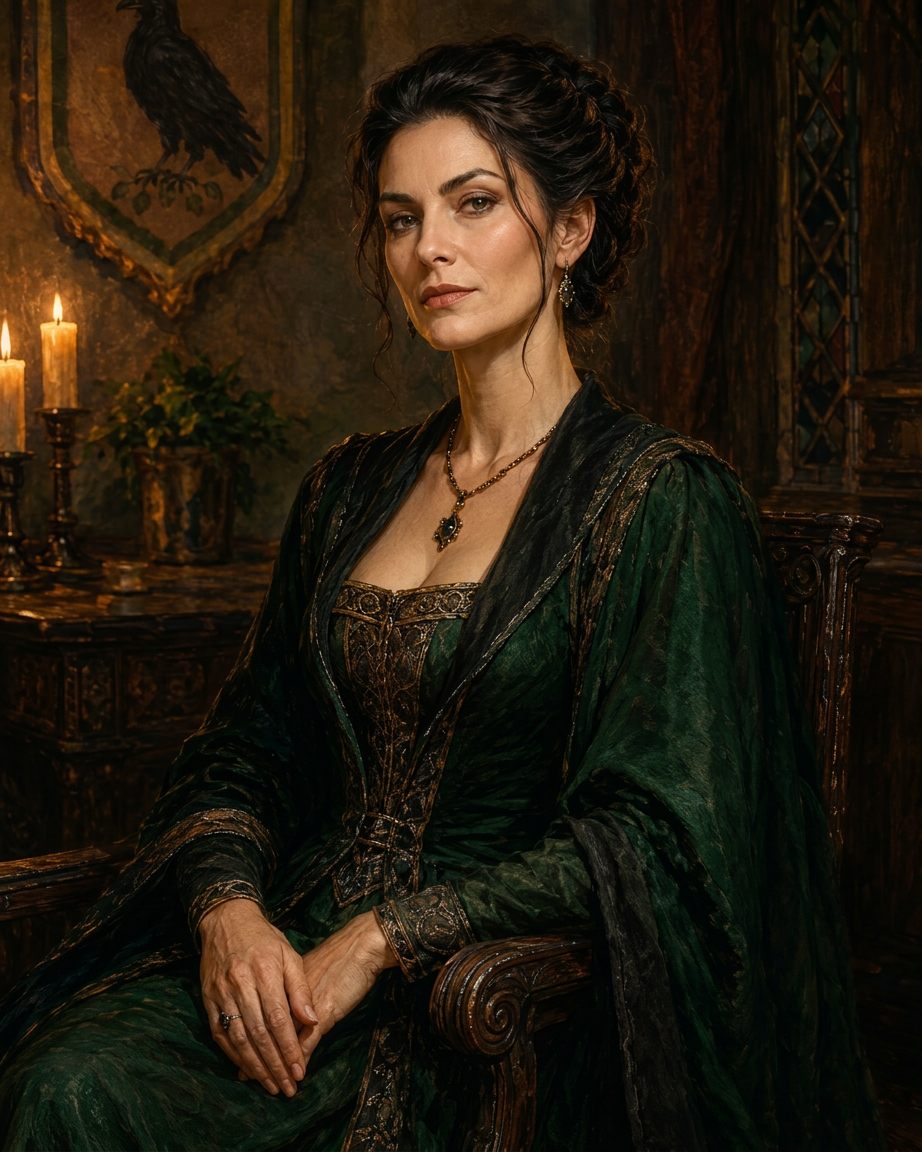
Lady Eliana Blackthorne, wife of Joseph Blackthorne and mother of Morgann, is regarded throughout the western territories as intelligent, observant, deeply kind, and considerably more formidable than many outsiders first assume.
Where Joseph often projects steadiness through physical presence and military practicality, Eliana’s strength lies in emotional intelligence, household management, social perception, and an ability to recognize what people need long before they ask for it. Blackthorne Manor’s reputation for warmth, stability, and fierce protectiveness owes as much to Eliana’s influence as Joseph’s.
She raised Morgann within a household that valued usefulness without stripping away tenderness, helping shape the unusual balance of competence and care that later became central to Morgann’s identity. Eliana never attempted to force her daughter into the narrow expectations often placed upon noblewomen at court, though she ensured Morgann understood both the dangers and necessities of moving within noble society.
The deaths of Morgann’s older brothers during an outbreak of the fevers permanently altered the emotional landscape of the Blackthorne household. Eliana survived that grief without surrendering to bitterness, though the losses sharpened the family’s already fierce protectiveness toward one another.
Within noble circles, Eliana is often underestimated by those who mistake gentleness for passivity. In reality, she possesses a quiet but immovable sense of judgment and an extraordinary ability to hold both kindness and steel in the same hand. Guests frequently leave Blackthorne Manor feeling cared for before they fully realize they have also been carefully assessed.
Her relationship with Queen Emily became particularly strong during Dairen’s reign, grounded in mutual respect, shared protectiveness toward their families, and a common understanding that love and gentleness are not weaknesses simply because cruel people fail to understand them.
Baron Johnathan Avery

Baron Johnathan Avery is head of House Avery and one of the western lords most closely tied to both House Blackthorne and the crown. Practical, disciplined, and politically cautious, Johnathan built his reputation through reliability rather than spectacle, becoming known as a man whose word could generally be trusted even in periods when trust within Chandory’s court was in dangerously short supply.
As a young nobleman, Johnathan trained beside Joseph Blackthorne and the future King Dairen at Tunbridge. The friendships formed there endured well into adulthood and became part of the foundation of the western alliance network that later helped stabilize the kingdom during the early years of Dairen’s reign. Like Joseph, Johnathan recognized signs of Alric’s abuse long before anyone openly spoke of such things, and that knowledge permanently shaped how he viewed both the prince and the crown itself.
Under Johnathan’s leadership, House Avery maintained strong regional influence through cavalry training, disciplined levies, road security, and careful political management. Though not as openly independent as House Blackthorne, the Averys became known for steadiness, military competence, and a willingness to answer the crown quickly when genuine crisis arose.
Johnathan is generally regarded as more traditionally noble in temperament than Joseph Blackthorne, with greater patience for court etiquette and political restraint. Even so, he has little tolerance for performative cruelty or nobles who mistake rank for character.
His greatest private disappointment became the growing bitterness and entitlement within his eldest son, Doran Avery. Johnathan understood far earlier than many others that Doran viewed marriage, inheritance, and status primarily through possession and ambition rather than partnership or duty. The strain this placed upon House Avery’s relationships, particularly with the Blackthornes and the crown, became one of the more painful fractures within the western alliance network.
Despite those tensions, Johnathan remained deeply loyal to both Chandory and the families tied to its survival. He is widely viewed as a man who values responsibility above pride, even when doing so costs him personally.
Lady Marta Avery
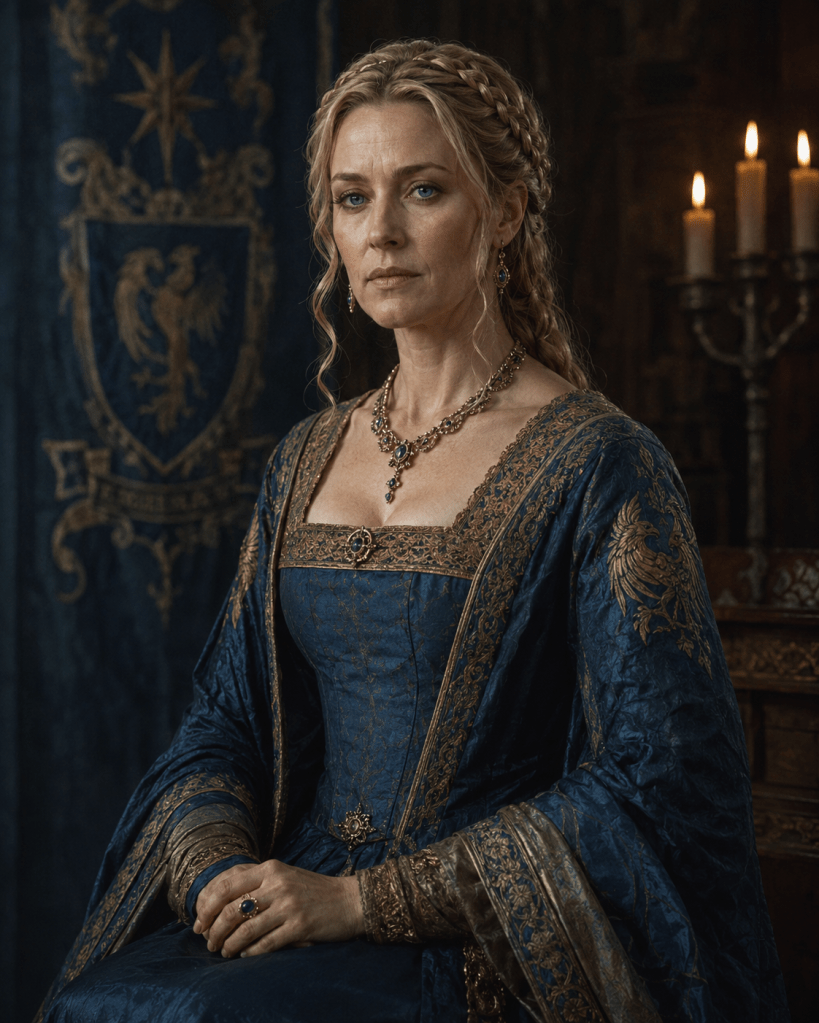
Lady Marta Avery is known within western Chandory as poised, politically perceptive, and considerably sharper than many court observers initially realize. While House Avery’s military reputation often draws more public attention, much of the family’s social stability and diplomatic strength rests quietly upon Marta’s judgment.
Raised within noble society, Marta understands court expectations instinctively and moves through them with practiced control. Unlike some noblewomen who treat social rituals as performance alone, Marta uses observation, restraint, and careful conversation as tools for gathering information, managing alliances, and protecting her household’s interests.
Within the western houses, she is often viewed as a moderating influence: capable of smoothing conflict where possible while still recognizing when firmness is necessary. She possesses a strong awareness of how quickly pride, resentment, or poorly managed ambition can destabilize both families and political relationships.
Marta’s relationship with Lady Eliana Blackthorne is longstanding and complicated in the way many durable noble friendships become over time: built through shared responsibilities, marriages, pregnancies, winters, grief, celebrations, and years spent managing households shaped by powerful personalities and dangerous politics.
Though she loves her children fiercely, Marta is neither blind to their flaws nor sentimental about the damage unchecked entitlement can cause. Doran Avery’s increasing resentment and possessiveness became a source of profound private distress within the Avery household, particularly as tensions surrounding Morgann Blackthorne and the royal family intensified.
At court, Marta is generally regarded as elegant, composed, and difficult to unsettle. Among those who know her well, however, she is recognized as something far more formidable: a woman who understands exactly how fragile peace between powerful families can become, and how much work it takes to keep a kingdom from tearing itself apart over old grievances and wounded pride.
Baron Geoffrey March

Baron Geoffrey March is the head of House March and father of Queen Emily. A lesser noble by rank but not by character, Geoffrey is known for steadiness, intelligence, and the kind of quiet authority that does not need to announce itself before being obeyed.
Before Emily’s marriage to Dairen, House March was respectable but not especially powerful, positioned close enough to the capital to understand court politics but far enough from its highest circles to avoid being devoured by them. Geoffrey managed that balance carefully. He valued education, restraint, estate stability, and the preservation of family dignity over spectacle or reckless ambition.
As father to the woman Dairen chose against King Alric’s wishes, Geoffrey found his family pulled abruptly into the dangerous center of royal attention. He understood the risks of Emily marrying the crown prince, especially under a king like Alric, but he also recognized the sincerity of Dairen’s devotion and the depth of Emily’s choice. His support of the match was not careless ambition. It was trust in his daughter’s judgment and in the young man who loved her.
Geoffrey’s relationship with Emily remains one of deep affection and respect. He sees clearly that queenship has cost her, but he also understands that she was never a woman meant to be ornamental. His pride in her is quiet, fierce, and sometimes edged with anger toward those who mistake her kindness for weakness.
Within Chandory, Geoffrey represents the best of the lesser nobility: educated, loyal, observant, and far harder to intimidate than rank alone would suggest.
Lady Anne March
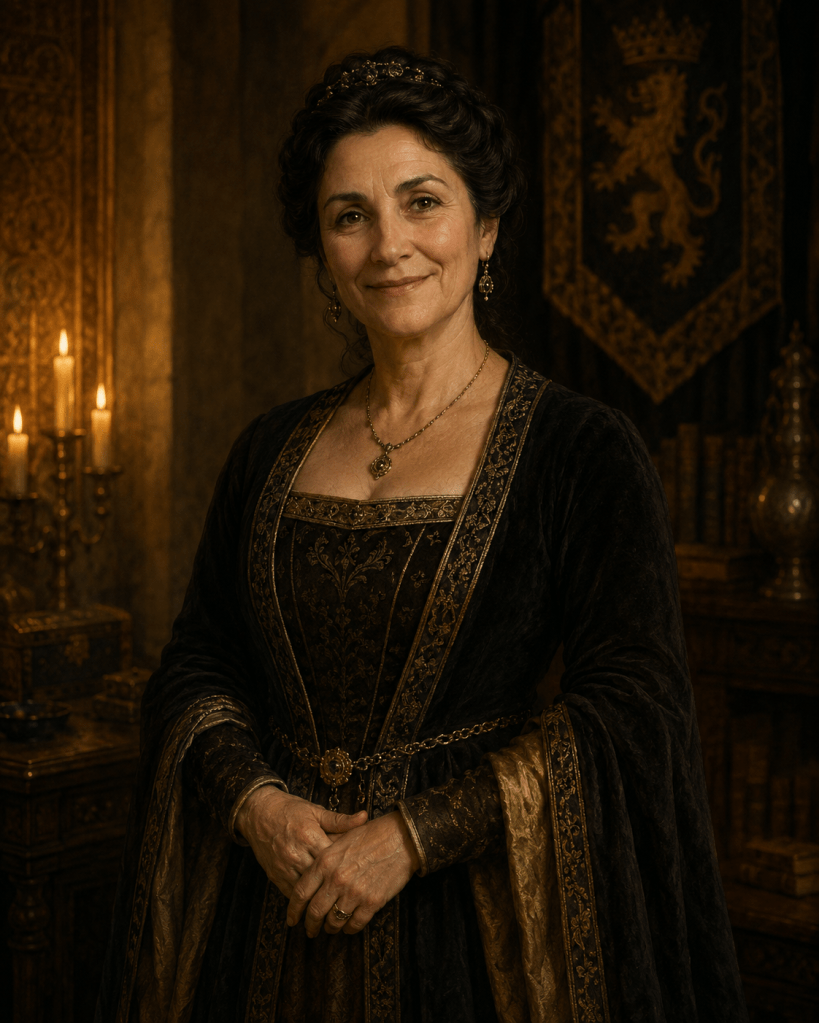
Lady Anne March is the practical and emotional heart of House March. Wife of Geoffrey March and mother to Emily and her younger siblings, Anne is known for warmth, discipline, intelligence, and a distinctly unromantic understanding of how families survive difficult things.
Though Emily has a different biological mother who died shortly after Emily was born, Anne raised her as her own daughter, and that bond shaped much of Emily’s understanding of motherhood, care, and chosen devotion. Anne’s love is neither fragile nor sentimental. It is practical, watchful, and deeply rooted, the kind of love that notices when someone has not eaten, when a child is too quiet, when a husband is trying to hide worry behind manners.
As Emily rose from baron’s daughter to queen, Anne became part of the larger emotional scaffolding that helped keep her grounded. She understands court danger without being seduced by court grandeur, and she has little patience for anyone who treats her daughter’s gentleness as permission.
Anne’s household is one of order without cruelty, faith without spectacle, and affection without indulgence. She raised children who understood responsibility, literacy, loyalty, and the value of keeping their heads when more powerful people lost theirs.
Among the March family, Anne is often the one who sees the truth of a room first. She may not always speak quickly, but when she does, her words tend to land where they are needed.
Celeste “Cilia” March
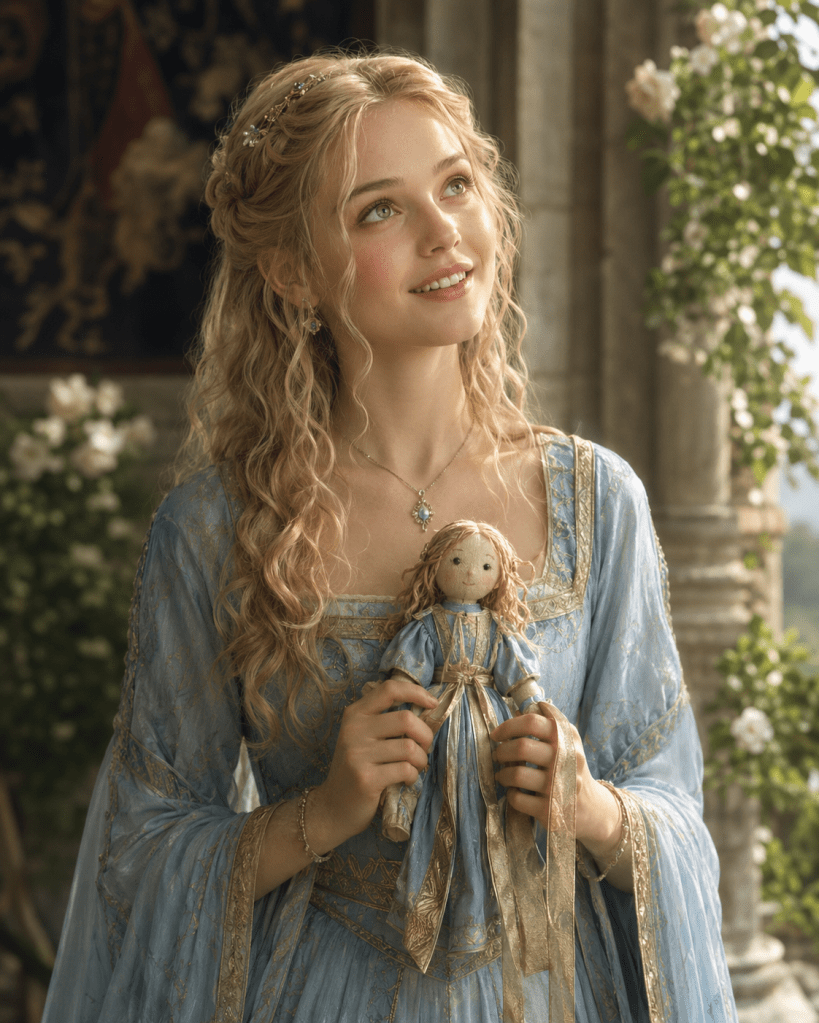
Celeste March, often called Cilia within the family, is Emily’s youngest sister. Though physically grown, she has remained childlike in understanding, with a mind much younger than her years. Within House March, she is loved, protected, and treated not as a burden, but as a cherished daughter and sister whose safety matters fiercely.
Cilia’s world is smaller and gentler than the political world surrounding the crown. She understands people through affection, routine, trust, fear, and familiarity more than through rank or court meaning. Because of this, she often responds to truth more directly than others do. She may not understand the full shape of politics, but she knows when someone is kind, when someone is frightening, and when the people she loves are hurting.
Emily’s bond with Cilia is particularly tender. As the eldest March child, Emily grew up with a strong protective instinct toward her younger siblings, and Cilia’s vulnerability deepened that part of her. The care Emily learned in her family did not vanish when she became queen. It became part of how she mothers, rules, and loves.
Cilia is also a reminder of the March family’s private humanity beneath its public connection to the crown. In a world where noble children are often valued for marriage, inheritance, usefulness, or alliance, the way House March protects Cilia says something important about who they are. She is loved because she is theirs. That is enough.
Geoffrey “Paul” March

Geoffrey March, more commonly called Paul within the family, is Queen Emily’s eldest younger brother and one of the steadier figures within the extended March household. Intelligent, practical, and quietly protective, Paul inherited much of his father Geoffrey’s calm judgment while developing a sharper instinct for political undercurrents than many people initially realize.
Though not as publicly visible as his royal sister, Paul became increasingly important during Dairen’s reign as tensions surrounding the crown deepened. He understands both noble politics and ordinary people unusually well, able to move between village concerns, household management, military logistics, and court realities without losing perspective in any of them.
Paul possesses a dry sense of humor and a strong protective streak toward his family, particularly Emily and his younger siblings. He remembers clearly what Emily sacrificed in marrying the crown prince and never entirely forgave the dangers and humiliations imposed upon her during Alric’s reign, even while understanding why she chose Dairen.
Unlike some noblemen who chase proximity to the crown for ambition alone, Paul values stability more than spectacle. He is often most effective in moments of crisis, when practical decisions matter more than appearances and someone must quietly keep frightened people moving in the same direction.
Among the March siblings, Paul frequently serves as a stabilizing center: the brother who listens first, speaks carefully, and notices problems before they fully erupt.
William “Will” March

William March, usually called Will, is one of Emily’s younger brothers and among the warmest members of the March family. Good-natured, loyal, emotionally open, and often quicker to laughter than many nobles of his generation, Will reflects much of the gentler emotional culture that shaped the March household.
Unlike some men raised near royal power, Will carries little interest in dominance or court manipulation. He is far more comfortable among soldiers, family gatherings, estate concerns, and ordinary household life than in the sharper circles of political maneuvering.
Will was a young widower with one daughter, Sophie who eventually married again to Ruth, a single mother who entered the marriage with an illlegitimate son, Jack FitzHenry. He raised Jack fully, later becoming father to additional children of his own. The ease with which he built family through love rather than blood alone reflects broader March family values surrounding care, loyalty, and belonging.
During one of the kingdom’s major internal crises, Will served defending the castle and suffered severe injuries in the fighting. Though he survived, the wounds permanently altered the course of his life and eventually forced him into early retirement from active military service. Even so, he remained closely tied to both the royal household and the western alliance families.
Within the family, Will is often remembered for his warmth, steadiness, and refusal to let cynicism hollow him out despite the violence and grief surrounding the crown.
Matthew March
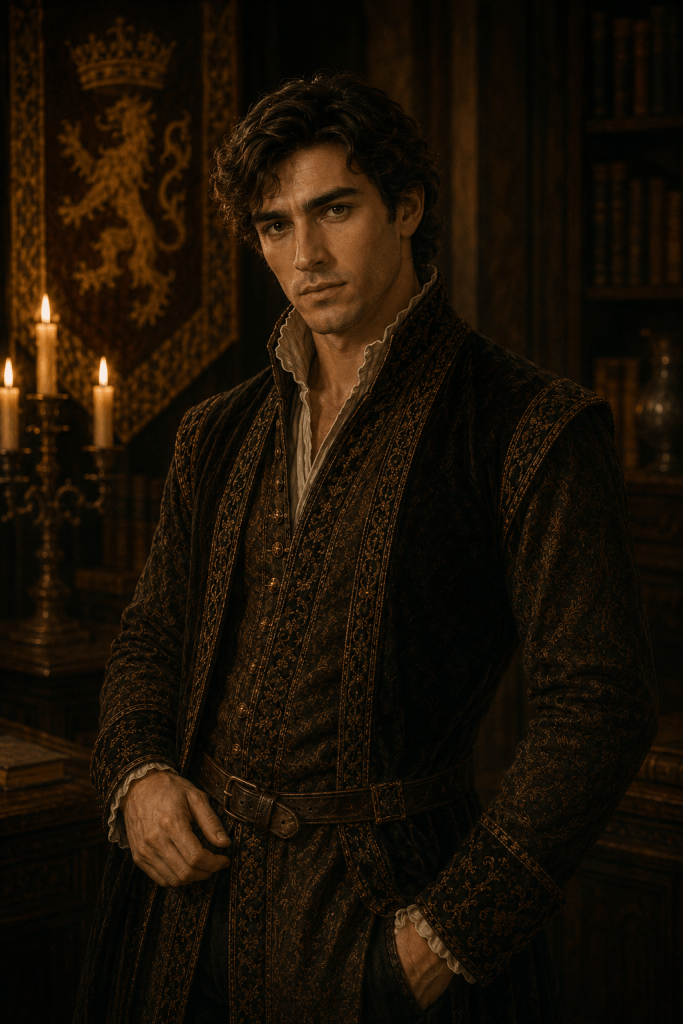
Matthew March is the youngest of Emily’s brothers and perhaps the most outwardly restless of the March siblings. Intelligent, sharp-eyed, and occasionally impulsive, Matthew grew up beneath the long shadows cast by both his elder siblings and the increasingly dangerous political world surrounding the crown.
Where Paul tends toward steadiness and Will toward warmth, Matthew often brings energy, quick reactions, and a willingness to move first when others are still deciding whether action is necessary. This makes him valuable in moments of crisis, though it also occasionally places him at odds with more cautious members of his family.
Matthew maintains particularly strong loyalty toward Emily. Having grown up watching her navigate both court scrutiny and queenship, he developed an intense dislike for people who mistake kindness for weakness or who attempt to use political power to corner those they believe less dangerous than themselves.
Like much of the March family, Matthew moves more comfortably among soldiers, retainers, and household staff than among the most rigid circles of court etiquette. He possesses the March talent for noticing emotional undercurrents quickly, though he is somewhat less skilled than Paul at hiding when he is angry about what he sees.
During periods of instability within Chandory, Matthew often served in protective or intelligence-related roles tied to the castle and the royal household. He understands that survival around crowns frequently depends less on grand heroics than on who notices danger early enough to act before everyone else realizes it exists.
Within the family, Matthew is often viewed with equal parts affection and exasperation: deeply loyal, occasionally reckless, and very much a March.
Dessen
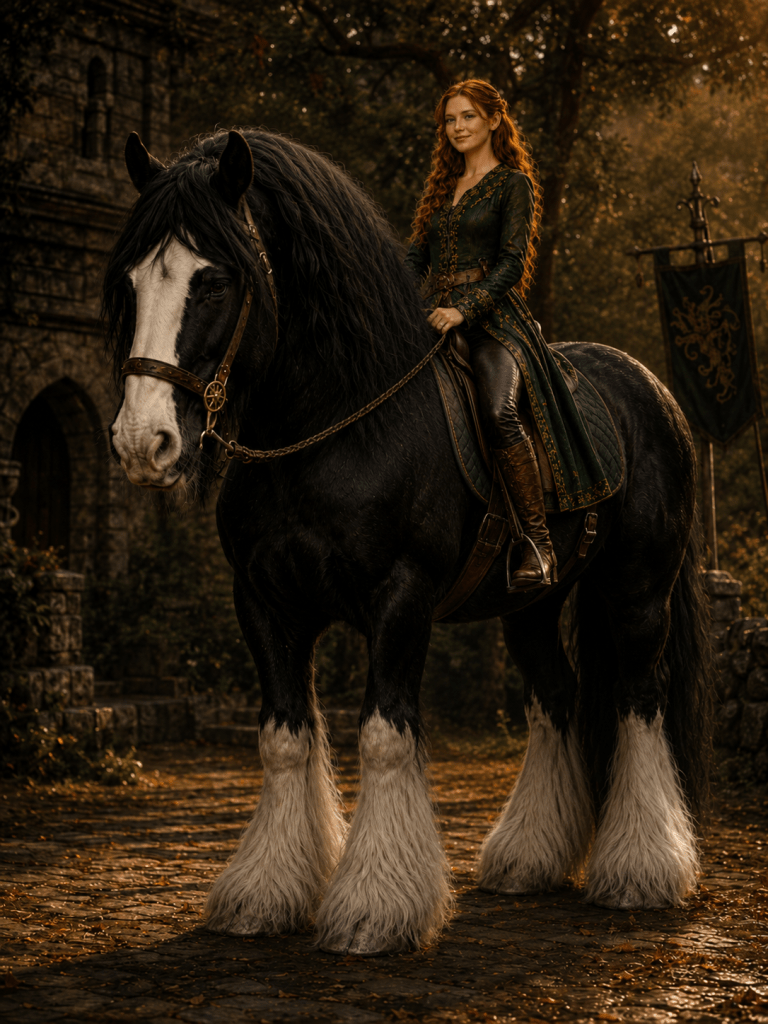
Dessen is Morgann Blackthorne’s massive black-and-white Shire stallion and one of the most recognizable animals in Chandory. Towering even beside royal warhorses, with a black coat marked by heavy white feathering, crest, and blaze, Dessen is frequently described by soldiers and nobles alike as looking less like a riding horse than something out of old battlefield legend.
Intelligent, dramatic, deeply opinionated, and fully aware of how impressive he is, Dessen possesses the unusual combination of a true warhorse’s steadiness and the theatrical vanity of a creature accustomed to being stared at wherever he goes. He moves with deliberate confidence and has little patience for fools, rough handling, or people he dislikes.
Morgann rides Dessen without a bit, guiding him through pressure, voice, touch, and long familiarity rather than force. Their partnership is famous throughout the western territories and increasingly throughout Chandory itself, not simply because of Dessen’s size, but because of the absolute trust between horse and rider.
Dessen originally came into Morgann’s life under violent circumstances. As a young girl, Morgann intervened when she discovered both Dessen and his dam, Arabella, being brutally mistreated by a traveling handler. After physically unhorsing the man responsible, Morgann effectively claimed the horses by throwing a single silver coin at him and declaring the matter settled. Joseph Blackthorne later joked for years that his daughter had stolen both horses outright. Morgann insisted it was a legal sale.
As Morgann’s political importance grew, Dessen became inseparable from her public image. His enormous frame, calm presence in battle conditions, and ability to carry armored riders through difficult terrain turned him into both a practical military asset and a symbolic one. In many ways, he reflects the same qualities people associate with Morgann herself: intimidating at first glance, fiercely loyal once trust is earned, and far gentler than outsiders expect.
Within the royal household, Dessen is regarded with a mixture of affection, awe, and occasional concern. King Dairen’s own royal warhorse, Geist, is notably smaller, a fact that amuses nearly everyone except perhaps the king himself.
Among the children, retainers, and western villages, however, Dessen is less a symbol of rank than a familiar presence: the great black-and-white stallion who arrives carrying safety, trouble, royalty, or some combination of all three.
Doran Avery

Doran Avery is the eldest son of Baron Johnathan Avery and Lady Marta Avery, heir to House Avery, and a young man very aware of what that ought to mean.
Raised in one of Chandory’s loyal western houses, Doran grew up with rank, expectation, and a future already laid before him. As Johnathan’s heir, he stands to inherit Avery lands, duties, and influence, but he has never quite learned the humility that should come with responsibility. Where his father is steady, loyal, and deeply respected, Doran is restless, proud, and easily wounded by anything that feels like refusal.
His failed courtship of Morgann Blackthorne left a deep mark on him. The match would have strengthened Avery enormously, joining his barony to Blackthorne’s wealth, lands, and influence. Doran saw the sense of it. He saw the advantage. What he did not see clearly enough was Morgann herself.
Morgann’s strength, rank, skill, and independence unsettled him. She was not the quiet, obedient bride he believed he deserved. She could outride, outshoot, outthink, and outrank him, and rather than admire those qualities, Doran resented them. Her refusal bruised more than his pride. It challenged the story he had told himself about what he was owed.
Doran is not without charm. He can smile easily, speak well when it suits him, and carry himself like a young nobleman born to command a room. But beneath that charm is grievance. He believes too much should have come to him simply because he wanted it, and he is angry when the world, or a woman like Morgann, refuses to arrange itself accordingly.
As the heir to House Avery, Doran represents a dangerous kind of inheritance: not his father’s loyalty, but entitlement dressed in noble colors.
King Alric
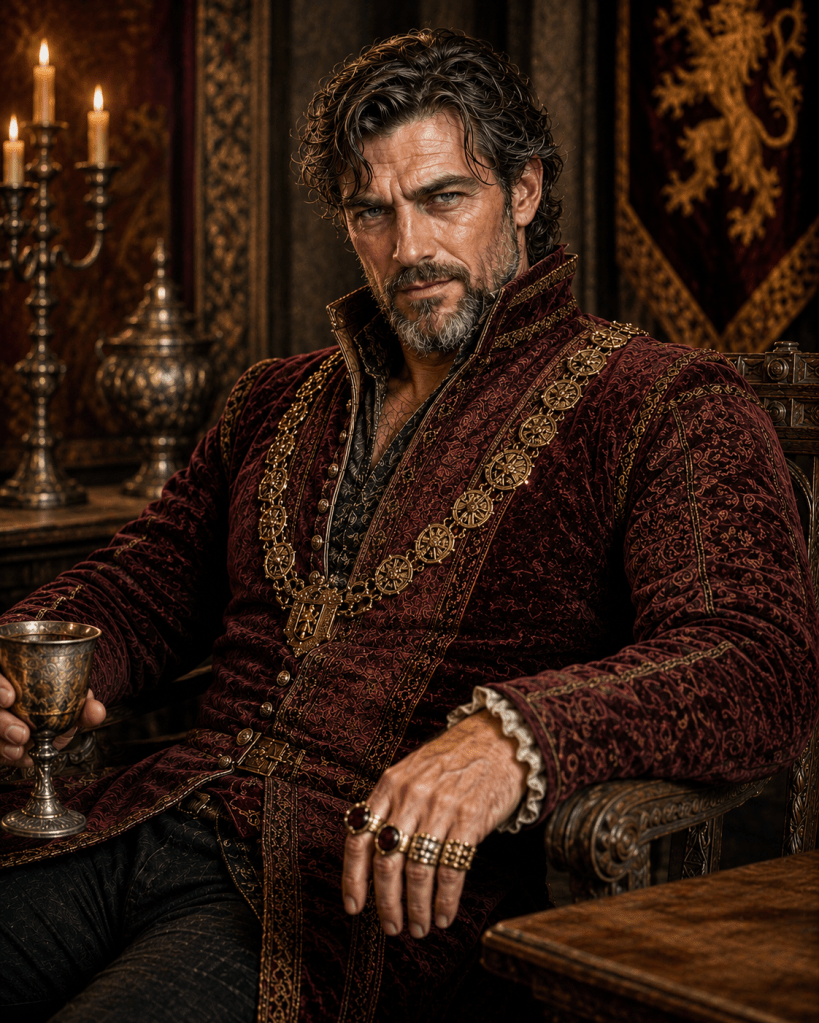
King Alric ruled Chandory with a hard hand, a bitter temper, and a deep belief that fear was the same thing as strength. To his court, he presented himself as a king of old discipline and royal certainty. To his children, his household, and too many of his subjects, he was something far smaller and more dangerous: a cruel man with a crown.
Alric’s reign was marked by suspicion, pride, and punishment. He demanded obedience and mistook tenderness for weakness. His children learned early that his love, if it could be called love at all, was conditional, uneven, and often violent. Dairen, his heir, bore the worst of it, beaten from boyhood for being too soft, too protective, too unwilling to become the sort of man Alric admired. Sarah and Mary Elizabeth were not spared his hand or his sharpness, and even Henry, the son Alric favored most, was damaged by the world his father built around him.
His cruelty did not end at the family door. Alric governed through intimidation, old privilege, and the belief that common people existed to obey the needs of their betters. Hunger, fear, and hardship mattered little to him when weighed against sport, status, or royal convenience. His beloved hunting lands near the Hythe River became a symbol of that rule: woods preserved for noble pleasure while ordinary people were expected to endure want beneath the law.
In the end, Alric died as he had lived, undone by pride. Drunk, arrogant, and certain of his own command over the world, he met his end in a hunting accident along the Hythe River. Too much drink, too much hubris, and too little sense carried him into the water, where the river solved what no courtier had dared to challenge openly.
His death freed Chandory from his shadow, but not from his consequences. The wounds Alric left behind shaped his children, his court, and the kingdom itself. Dairen’s reign would become, in many ways, an answer to his father’s: a refusal to let fear stand in for loyalty, cruelty masquerade as order, or power feed only the powerful.
Catriona – Dowager Queen Mother
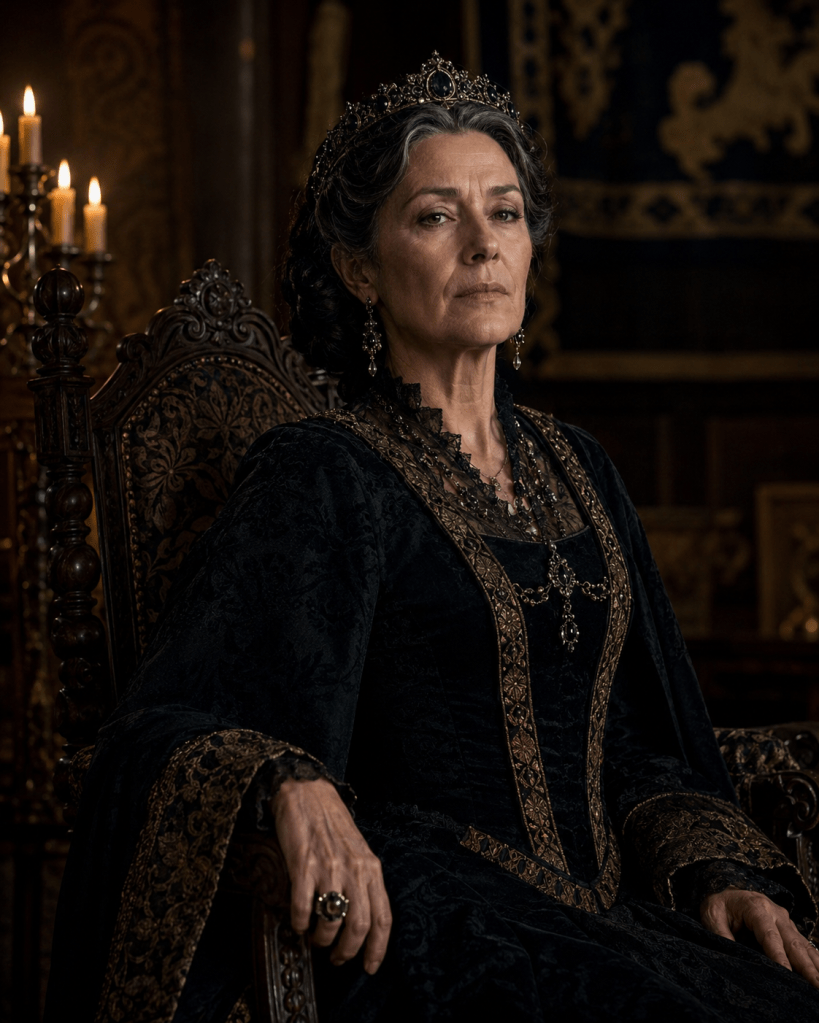
Queen Catriona was consort to King Alric and mother to Sarah, Dairen, Henry, and Mary Elizabeth. To the court, she was a queen of old manners, sharp discipline, and careful dignity. She understood ceremony, rank, and the language of power, and she expected those beneath her to remember their place.
But Catriona’s household was not a gentle one. Married to a cruel and violent king, she learned to survive by accommodation, silence, and a cold kind of obedience. She did not protect her children from Alric as they deserved. Too often, she patched wounds after the damage was done and called endurance virtue. In her world, love was tangled with duty, fear, and royal expectation until tenderness had little room left to breathe.
Her children carried the cost of that failure differently. Sarah found a life beyond Chandory. Dairen became king in opposition to nearly everything his father had been. Henry absorbed the harshest lessons of Alric’s court and mistook cruelty for strength. Mary Elizabeth learned to see through soft words and false comforts with a clarity that made her difficult to deceive.
As Dowager Queen, Catriona remains a figure of rank, history, and unease. She belongs to the old Chandory, the one Dairen’s reign is trying to outgrow. Regal, proud, and often cutting, she is a woman shaped by power, but also one who helped preserve some of its ugliest habits.
Prince Henry
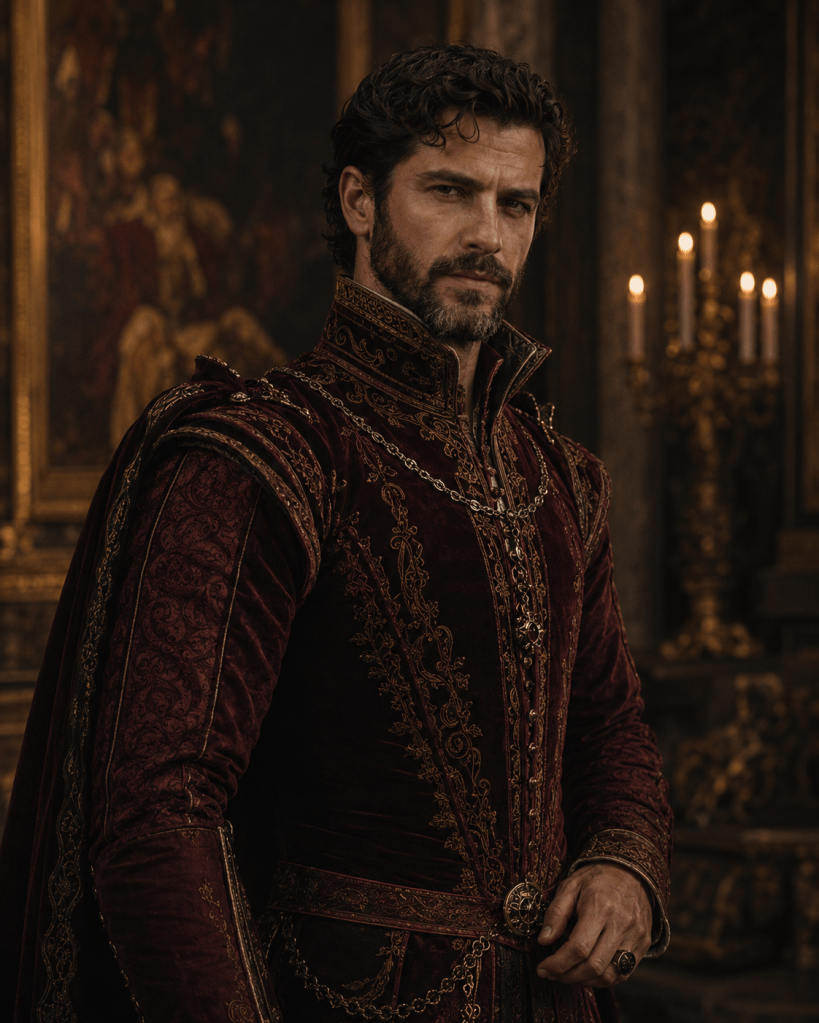
Prince Henry of Chandory was born second son to King Alric, but never learned to live as a second son.
Where Dairen inherited the crown by birth, Henry inherited Alric’s temper, his contempt, and his belief that fear was the only honest language of power. He grew up watching his father call cruelty discipline and brutality strength, and unlike Dairen, Henry did not reject the lesson. He sharpened himself on it.
To Henry, Dairen’s greatest failure is softness. Mercy, restraint, patience, loyalty earned rather than forced, all of it seems to Henry like weakness dressed in royal cloth. He believes Chandory needs a harder hand than Dairen’s, a king willing to punish quickly, rule harshly, and remind the realm that love has no place near power. In Henry’s mind, birth order is an accident. Fitness to rule is something else entirely, and he has convinced himself that he possesses it.
He does not.
Henry’s entitlement curdled young. As Alric’s favored son, he learned to mistake indulgence for worth and violence for authority. He resents Dairen not only because Dairen has the throne, but because Dairen has survived their father without becoming him. That survival offends Henry. It makes Dairen’s kindness look less like weakness and more like choice, and Henry cannot bear that.
Dangerous, angry, and deeply convinced of his own importance, Henry remains one of the great threats within the royal bloodline. He is not a foreign enemy. He is not a stranger at the gates. He is family, and therefore worse: a man who knows where the old wounds are, who remembers the language of Alric’s house, and who believes the kingdom should have been his because he is willing to hurt what Dairen insists on protecting.
Princess Sarah and Dowager Princess Mary Elizabeth
Princess Sarah, Duchess of Langley
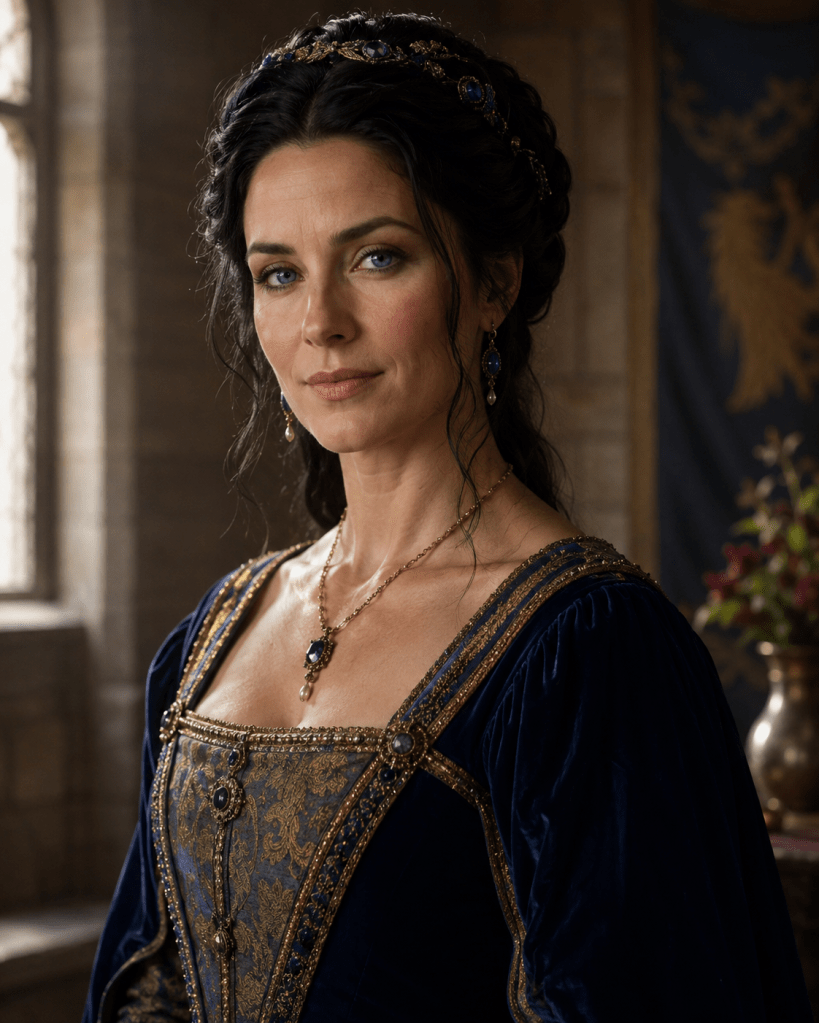
Princess Sarah is the eldest child of King Alric and Queen Catriona, older sister to King Dairen, Prince Henry, and Princess Mary Elizabeth. Born a princess of Chandory, she was raised with the best tutors available and is fully fluent in Chandorian, English, and French. Her intelligence, steadiness, and ability to move between courts make her far more than a royal sister brought home for safety.
Sarah married David, Duke of Langley, and built a life in England with him and their sons. Though distance kept her from Chandory for many years, she never stopped loving her brother, nor did she forget what they survived together as children. Unlike Dairen, Sarah escaped the constant pressure of being heir, but she still knows what it means to grow up in Alric’s house: to be hungry for kindness, to recognize fear behind manners, and to understand the wounds cruelty leaves behind.
After Bosworth, Sarah and her family come to Chandory under Dairen’s protection. Her husband’s Yorkist loyalties make England dangerous, and Dairen refuses to leave his sister, nephews, and kin exposed to a newly unsettled throne. In Chandory, Sarah becomes invaluable not only as family, but as a bridge between worlds. She can translate language, politics, grief, and expectation with equal skill.
Warm, perceptive, and quietly formidable, Sarah sees clearly how much her brother has changed since their father’s death. She sees the love around him now: Emily, his children, Rhys, Morgann, and the family he has built by choice as much as blood. For Sarah, returning to Chandory is not simply a retreat from danger. It is the beginning of seeing her brother finally receive the love he was always owed.
Princess Mary Elizabeth of Chandory
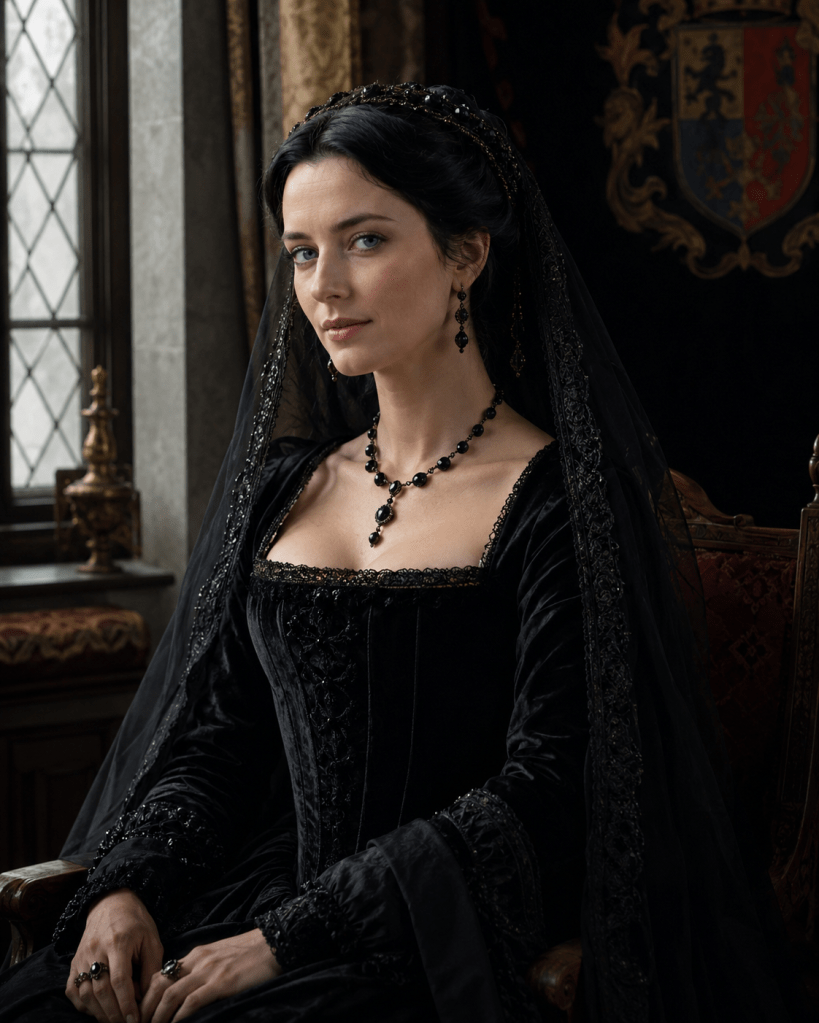
Princess Mary Elizabeth is the youngest child of King Alric and Queen Catriona, sister to Sarah, Dairen, and Henry. She was born into a royal house where affection was scarce, fear was common, and silence was often safer than protest. Unlike Dairen, she was never raised to inherit the crown, but she learned early that power still shaped every room she entered.
Mary Elizabeth’s marriage to Alexander Dunhaven was arranged under Alric’s authority. It was not a happy match. Alexander proved violent, and when Dairen learned what had been happening to his sister, Alexander disappeared after a hunting trip and never returned. His horse came back without him. No one needed to ask too many questions.
Since then, Mary Elizabeth has lived publicly as a widow, dressed in mourning black, though she does not truly mourn the man who harmed her. She has no wish to remarry and no patience for anyone who thinks widowhood should make her meek. Her black clothing is not grief so much as armor, a public answer that allows her freedom, dignity, and control over her own life.
Sharp-tongued, observant, and unsentimental, Mary Elizabeth often says what others are too polite to name. She loves her brother Dairen, but she does not flatter him. She sees his wounds clearly because she carries her own, and she is willing to pull truth into the light even when it bites. Where Sarah brings warmth and steadiness, Mary Elizabeth brings precision, wit, and the sort of honesty that can feel like a slap and a rescue at once.
As a dowager princess, Mary Elizabeth stands as one of the surviving witnesses to Alric’s private cruelty and Dairen’s better reign. She is proof that survival does not have to look soft, sweet, or forgiving. Sometimes survival wears black, smiles rarely, and tells kings exactly when they are being fools.
Other:
Baron Thomas Greystoke
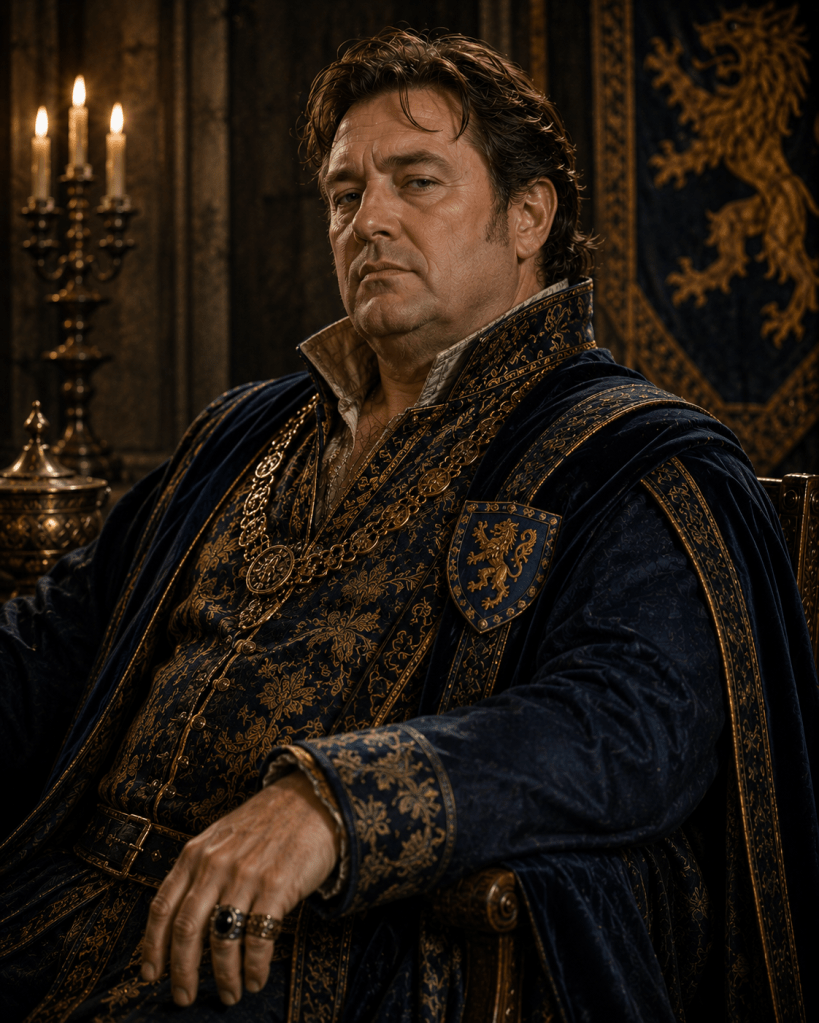
Baron Thomas Greystoke was never a man who understood refusal well.
The Greystoke barony bordered March lands, and Thomas saw opportunity where he should have seen people. When Emily March was young, he attempted to court her, though he was roughly ten years her senior and did little to recommend himself beyond rank, proximity, and his own bloated sense of entitlement. He was loud, boorish, and certain that wanting something should be nearly the same as being owed it.
Geoffrey March did not agree.
Emily was not given to him, and Greystoke never forgave the insult. That Emily herself had no desire to marry him mattered even less than Geoffrey’s refusal. In Greystoke’s mind, the match made perfect sense because it would strengthen him. March lay beside his own lands. Marriage to Emily would, he believed, draw those lands closer to his reach and perhaps even double his holdings in time.
That Emily had brothers who stood to inherit March did not trouble him. Nor did Emily’s will. Men like Greystoke rarely let legal reality or a woman’s consent interfere with the shape of what they believe they deserve.
His resentment deepened when Crown Prince Dairen began courting Emily. It was one thing, in Greystoke’s mind, to be refused by her father. It was another to be displaced by the heir to the throne. Dairen did not merely win Emily’s affection. He made Greystoke’s grievance ridiculous, and that was something Thomas Greystoke could not bear.
By the time of Taking of the Queen, Greystoke’s old anger has had years to sour. He is not a romantic rival wronged by fate. He is an entitled man who mistook proximity for claim, refusal for humiliation, and Emily March for property he had been denied.
Stewart Rasbane
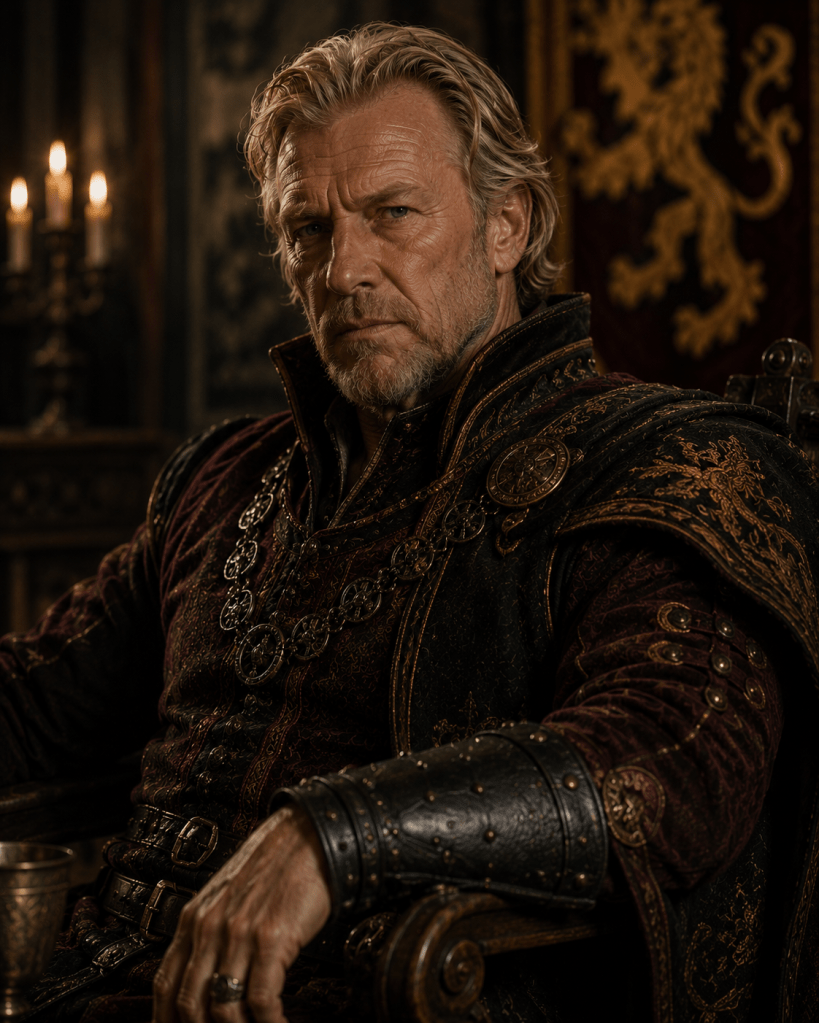
Stewart Rasbane served for years as King Alric’s Captain of the Guard, a position that suited both his ambition and his temperament. Under Alric, loyalty was often measured less by honor than by obedience, and Rasbane learned to thrive in a court where cruelty could be called discipline and proximity to the king could be mistaken for virtue.
After Alric’s death, Rasbane remained in royal service for a time, one of the old king’s men left standing in a kingdom trying to become something better. His career ended after he was injured in a hunting accident, not while defending the crown or serving the realm, but King Dairen pensioned him generously all the same. Rasbane was not cast aside, impoverished, or humiliated. He had money. He had status. He had been treated with more mercy than Alric would ever have offered a wounded servant.
But Rasbane was never a man inclined to gratitude when grievance could be made more useful.
Much of his bitterness centered on his daughter, Hannah. Under Alric, promises had been made, or at least dangled close enough to be believed. Hannah had been led to expect that she might have a place near the crown, whether as a possible royal bride, a favored mistress, or at least a woman admitted to the prince’s bed. When Crown Prince Dairen chose Emily March instead, that imagined future collapsed.
To Rasbane, it was not merely disappointment. It was theft. The March girl had taken what he believed Alric had meant for his own bloodline to touch. The fact that Dairen had never wanted Hannah, and that Emily had done nothing but be loved, mattered little to him. Rasbane nursed old loyalty, wounded pride, and a father’s offended ambition until they became something far darker.
In Taking of the Queen, Stewart Rasbane stands as one of the ugliest remnants of Alric’s reign: a man spared by the new king’s mercy, yet still loyal to the old king’s rot.
 The Kingdom of Chandory